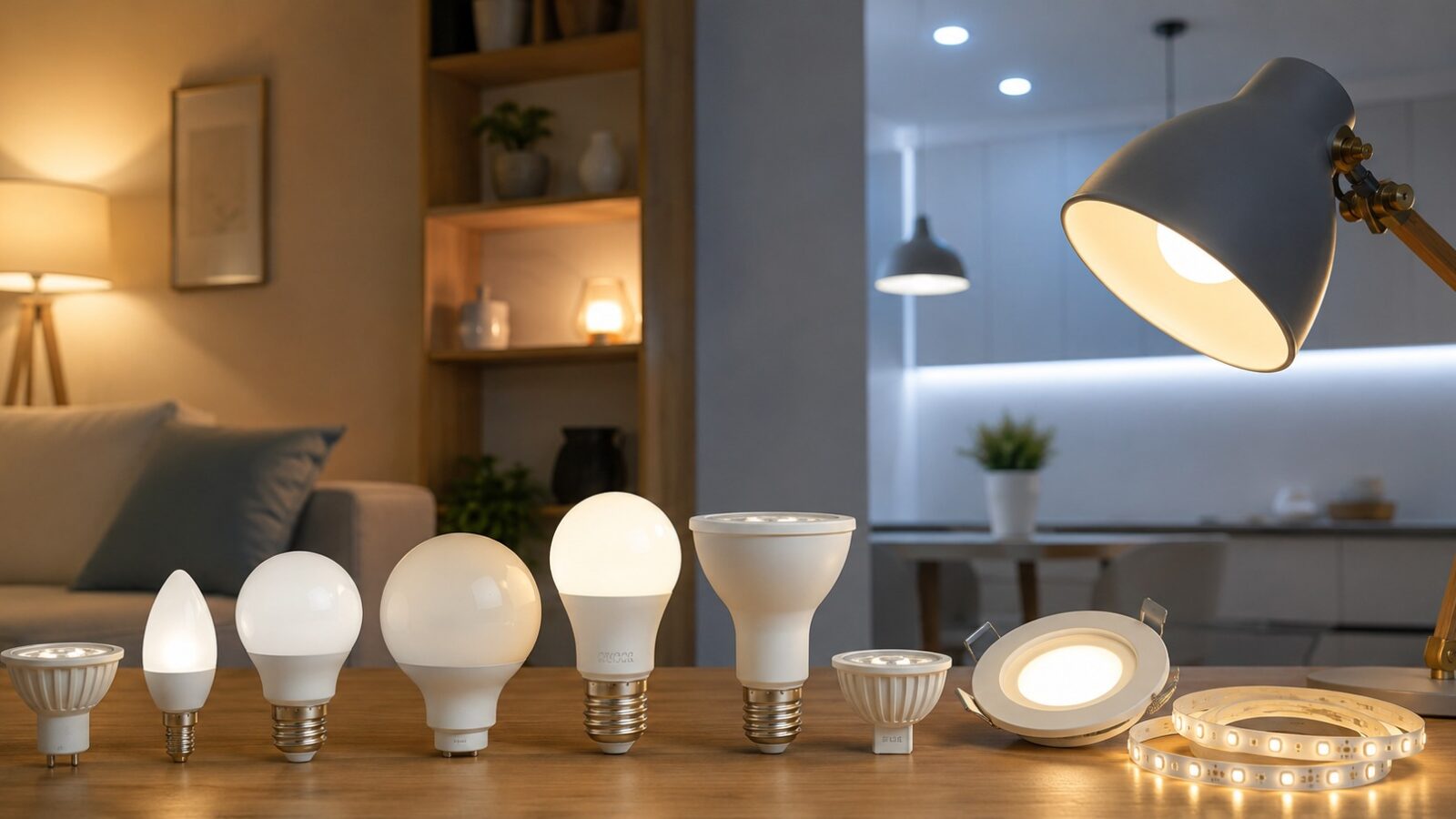
LED packaging can look technical, but four details answer most household questions: lumens, colour temperature, colour rendering and compatibility. Once those are understood, replacing a bulb becomes easier than matching the wattage printed on an old incandescent lamp.
Use lumens to choose brightness
Lumens measure the amount of light produced. Watts measure electricity use. Two LED bulbs can use similar wattage and produce different light output, so compare lumens when deciding how bright a room or lamp will be.
A shaded table lamp may need more output than a bare decorative bulb because the shade absorbs and redirects light. In contrast, several lamps in one room can each use a lower output.
Colour temperature changes the mood
Colour temperature is shown in kelvin. Lower numbers appear warmer and more yellow, while higher numbers appear cooler and bluer.
- Warm white: commonly used in bedrooms, living rooms and dining spaces.
- Neutral white: useful in kitchens, bathrooms and general task areas.
- Cool daylight tones: can support detailed work but may feel stark in relaxed rooms.
These are not strict rules. Wall colour, daylight and personal preference matter. Buy one bulb to test before replacing a whole room.
Colour rendering affects how objects look
The colour rendering index, often shortened to CRI, describes how faithfully colours appear under a light source. Higher values can be useful around artwork, clothing, food preparation and makeup.
CRI is only one measure and does not guarantee a pleasant bulb. Beam shape, flicker, colour consistency and fixture design also affect the result.
Check the base and physical size
Match the cap or base type exactly. Also check bulb length and width, especially in enclosed shades, spotlights and shallow fixtures. A bulb that fits electrically may still protrude or touch the shade.
For recessed lights and directional fittings, compare beam angle. A narrow beam creates a focused pool, while a wider beam spreads light more evenly.
Dimming requires three compatible parts
The bulb must be labelled dimmable, the dimmer must be suitable for LED loads and the fixture must support the combination. Incompatible parts can cause flicker, buzzing, limited dimming range or lights that do not switch off cleanly.
When replacing several bulbs on one dimmer, use matching models where possible. Mixed electronics may behave differently at low settings.
Enclosed fixtures need suitable bulbs
LED electronics produce less waste heat than incandescent bulbs but still need to manage heat. A bulb not rated for an enclosed fixture may run hotter and have a shorter life. Read the packaging and fixture instructions.
Room by room starting points
Living room
Use several warm sources at different heights. A floor lamp by a chair, a table lamp and a dimmable ceiling light create more flexibility than one bright fitting. See the layered living room lighting plan.
Kitchen
Prioritise clear task lighting at worktops and food preparation areas. Avoid placing a bright source behind the person working, where it creates a shadow on the surface.
Bedroom
Choose comfortable warm light and make controls reachable from the bed. A focused reading light prevents the whole room from needing high brightness.
Bathroom
Use fixtures rated for the location and follow local electrical requirements. Light on both sides of a mirror can reduce facial shadows.
Home office
Balance desk lighting with general room light to reduce contrast around the screen. Position lamps to avoid reflections.
Smart bulbs add convenience and maintenance
Colour changing, scheduling and remote control can be useful, but smart bulbs rely on software and accounts. Check whether physical switches remain practical and how long the product is expected to receive updates. The smart home privacy checklist covers account and network basics.
Do not judge life only by the number on the box
Rated life is based on test conditions. Heat, enclosed fittings, frequent switching and electrical quality can change real performance. Keep receipts for unusually early failures and confirm the bulb is being used in an approved fixture.
A quick shopping note
- Write down the base type and fixture restrictions.
- Choose the needed lumens.
- Select a colour temperature for the room.
- Check CRI when colour accuracy matters.
- Confirm dimmer and enclosure compatibility.
- Test one bulb before buying a multipack.
A good LED choice should disappear into daily life. It produces enough light, suits the room and works reliably with the existing controls without glare, buzz or awkward colour.