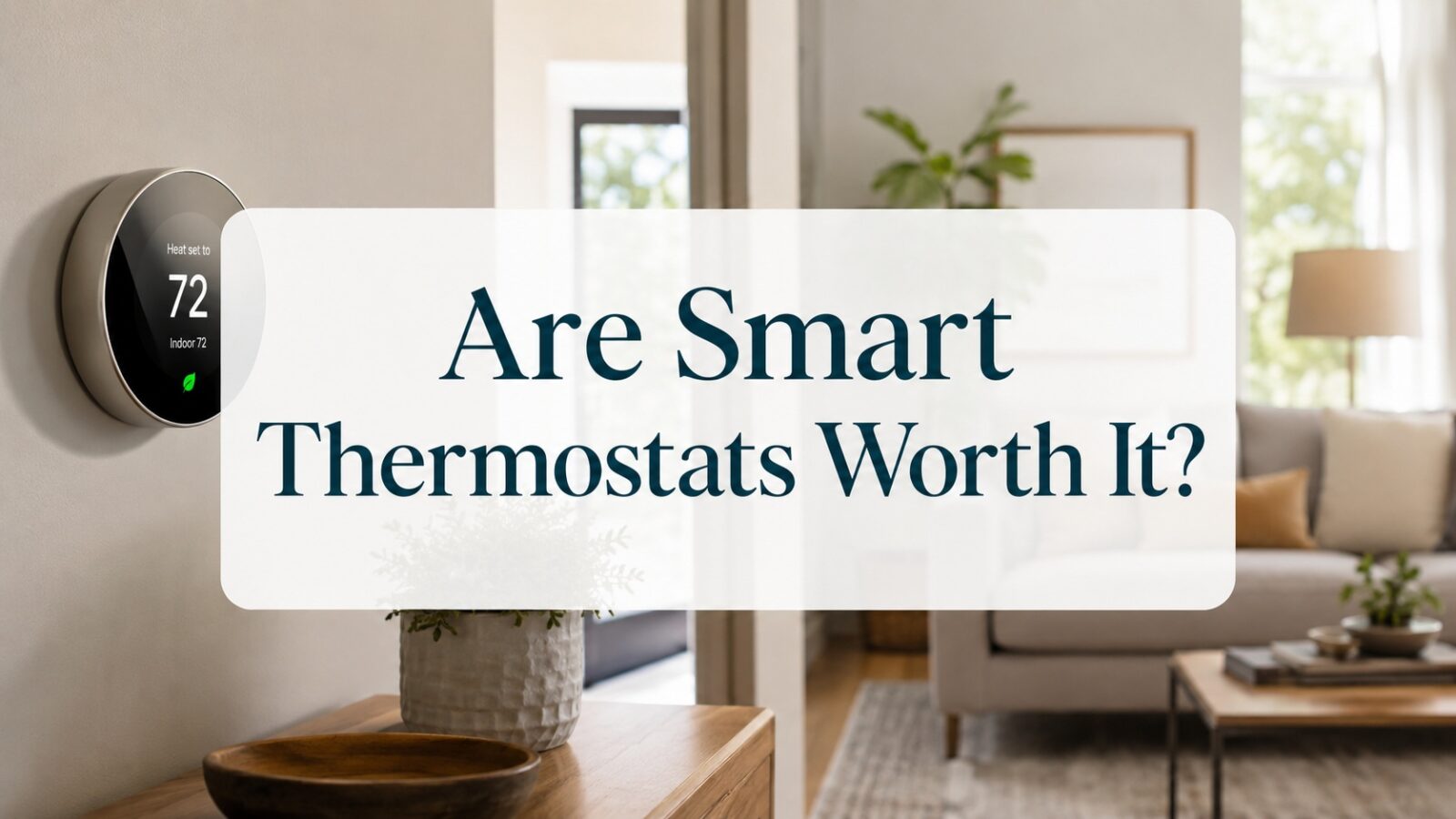
The smart thermostat is the device most likely to pay for itself in a smart home, which is exactly why it is worth asking honestly when it in practice does. The marketing promises lower bills and effortless comfort; the reality depends heavily on your home, your habits, and what you are replacing. For many households a smart thermostat genuinely trims heating and cooling costs while making the home more comfortable; for others the savings are modest and the appeal is mostly convenience. Here is a straight look at when it is worth it and how to choose one if it is.
It is the natural next step after lighting in building a beginner smart home, because unlike most gadgets it can in practice return money over time rather than just adding convenience.
How a smart thermostat saves money
The savings come from not heating or cooling an empty or sleeping house. A smart thermostat learns your schedule or uses your phone’s location to ease off when you are out and bring the home back to comfort before you return. It can adjust automatically overnight, give you detailed energy reports, and let you correct a forgotten setting from your phone. The core idea is simple: comfortable temperatures only when you need them, and efficiency the rest of the time, all without you remembering to adjust anything.
When it is genuinely worth it
- You currently use a basic, non-programmable thermostat and often heat or cool an empty home.
- Your schedule varies, so a simple timer would not capture when you are in practice home.
- You have higher energy costs or a larger home, where percentage savings translate to real money.
- You value the comfort and convenience of a home that is always at the right temperature.
When the payback is weaker
- You already run a well-set programmable thermostat and are disciplined about it.
- You are home most of the day on a steady schedule, so there is little empty-house time to save on.
- Your energy use is already low, leaving a small absolute saving to recover the cost.
- Your heating or cooling system is incompatible or needs costly rewiring to support one.
How to choose one
If it makes sense, a few things decide which to buy. First and most important, check compatibility with your heating and cooling system and whether you have the wiring it needs, since this is where installations go wrong. Then consider whether you want automatic learning or prefer to set schedules yourself, and make sure it fits your existing smart home ecosystem so it lives in the same app as your other devices. Sensors for individual rooms, geofencing, and clear energy reporting are the features that meaningfully affect savings and comfort.
Getting the most from it once installed
Buying the right thermostat is only half the job; the savings come from how you use it. A few habits make the difference between a device that pays for itself and one that just looks modern on the wall.
- Let it do its job, since constantly overriding the schedule or learning erases the efficiency it is built to deliver.
- Set sensible setback temperatures for when you are out and asleep, since the gap from your comfort temperature is where the savings live.
- Use geofencing or occupancy sensing if available, so the home adjusts automatically to whether anyone is there.
- Review the energy reports it provides, which reveal patterns you can tune for further savings.
- Combine it with good habits like sealing drafts, since a thermostat manages your system but cannot fix a leaky home.
A smart thermostat is a tool, and like any tool its value depends on using it as intended rather than fighting it.
Smart thermostat questions for different systems
Do smart thermostats really save money?
They can, mainly by not heating or cooling an empty or sleeping home. The savings are largest if you are replacing a basic thermostat, are often out, or have higher energy costs, and smaller if you already program a thermostat well.
Will a smart thermostat work with my heating system?
Often, but not always. Compatibility with your system type and wiring is the single most important thing to check before buying, since some setups need an adapter or professional installation.
Are smart thermostats hard to install?
Many are designed for straightforward DIY installation with clear guides, provided your wiring is compatible. Systems lacking a common wire or with unusual setups may need an adapter or a professional.
Do smart thermostats work without Wi-Fi?
Mostly yes, as a regular thermostat. The unit still controls your heating and cooling and keeps its programmed schedule during an internet outage; what you lose is the remote control from your phone, voice commands, and any cloud-based learning or energy reports until the connection returns. So an outage is an inconvenience rather than a failure, and the home stays comfortable on its existing schedule.
Can a smart thermostat damage my heating system?
Not if it is compatible and installed correctly, which is why checking compatibility and wiring beforehand matters so much. The risk comes from forcing an incompatible unit or wiring it wrong, so when in doubt have it installed professionally.
When a smart thermostat is the wrong upgrade
- Buying one before checking it is compatible with your system and wiring.
- Expecting dramatic savings if you already use a programmable thermostat well.
- Setting it up and then overriding it constantly, which erases the savings.
- Ignoring whether it fits your existing smart home ecosystem.
- Choosing on brand alone rather than compatibility and the features that drive savings.
The value comes from scheduling, not the screen
Be honest about what you are replacing. If you are upgrading from a basic dial or a programmable thermostat you never in practice program, a smart thermostat can pay for itself and is an easy recommendation. If you already run a programmable model with discipline, treat a smart one as a convenience and comfort purchase rather than a money-saver, and judge it on that basis. Either way, check compatibility first; nothing sours the experience faster than discovering your system needs rewiring after you have bought the device. A few minutes spent confirming compatibility, or asking an electrician, is cheap insurance against an expensive surprise, and it is the step most people regret skipping.
A smart thermostat is worth it for most people replacing a basic or unused thermostat, especially in homes that are often empty or have higher energy bills, where it can genuinely pay for itself while improving comfort. If you already program a thermostat well, it is more of a convenience upgrade. Check compatibility first, choose one that fits your ecosystem, and set it up without constantly overriding it.