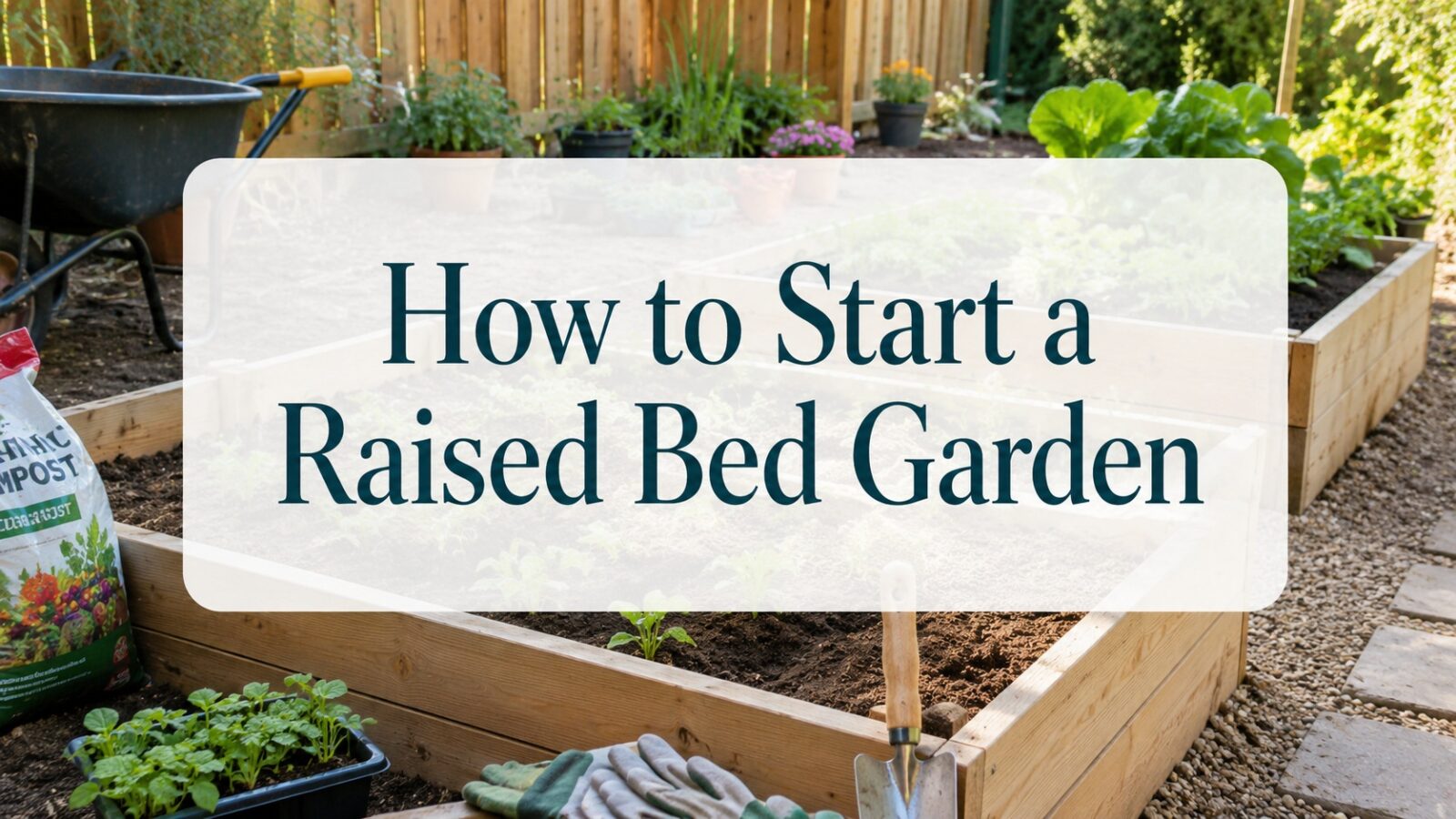
Raised beds are the easiest way for a beginner to grow vegetables well, and they solve most of the problems that make in-ground gardening frustrating. You control the soil completely, weeds and pests are easier to manage, drainage improves, the soil warms earlier in spring, and you do far less bending. For anyone who has graduated from a few pots or a balcony container garden and wants to grow more, a raised bed is the natural next step. Here is how to build and plant your first one so it thrives from the start.
The single biggest factor in a raised bed’s success is not the bed itself; it is the soil you fill it with and the sun it gets. Get those right and the rest is easy.
Choose the right spot
Before building anything, watch your space and pick a location with plenty of sun, since most vegetables need six or more hours of direct light a day. Put the bed somewhere reasonably level, with access to water, and where you will in practice walk past it, because a garden you see daily is a garden you tend. Avoid low spots that stay soggy and areas shaded by buildings or large trees for much of the day. The sun assessment matters as much here as it does for plants indoors.
Size and build the bed
Keep the dimensions practical so you can tend the bed without stepping in it.
- Keep the width to about four feet or less, so you can reach the center from either side without compacting the soil.
- Make the length whatever suits your space; longer is fine since you only reach across the width.
- Aim for a depth of at least 10 to 12 inches, which suits most vegetables; deeper helps root crops.
- Use untreated rot-resistant wood, metal, or another safe material, avoiding treated lumber for edibles.
- Set the bed on soil if you can, so roots and worms move freely; on a hard surface, make it deeper.
Fill it with good soil
This is where raised beds are won or lost. Do not simply shovel in garden dirt, which compacts and drains poorly. A reliable mix is roughly equal parts quality topsoil, compost, and a material that aids drainage and structure, giving a rich, loose, free-draining medium that roots love. Fill the bed nearly to the top, since it will settle. Good soil is the entire advantage of a raised bed, so it is worth getting right rather than economizing here.
Plant for your first season
Start with forgiving, productive crops rather than the trickiest ones, and you will get the early success that keeps you gardening.
- Choose easy beginner vegetables such as lettuce and salad greens, beans, radishes, courgettes, tomatoes, and herbs.
- Plant according to the spacing on the seed packet, resisting the urge to overcrowd, which invites disease.
- Plant taller crops where they will not shade shorter ones, generally to the north side.
- Water consistently, keeping the soil evenly moist, especially while plants are getting established.
- Mulch the surface to hold moisture and suppress weeds, which raised beds already reduce.
Keep it going
A raised bed rewards a little ongoing attention. Top up the soil with compost each season to replace nutrients, since intensive growing draws them down. Rotate what you plant where year to year to reduce pests and disease, water deeply rather than little and often to encourage strong roots, and stay on top of the few weeds that appear while they are small. None of this is demanding, and the raised format makes every task easier on your back than ground-level gardening.
Watering and extending the season
Two things separate a bed that limps along from one that produces abundantly: consistent water and a longer growing window.
- Water deeply and less often to encourage roots to grow down, rather than shallow daily sprinkles.
- A simple drip line or soaker hose on a timer takes the guesswork out and keeps moisture even.
- Mulch heavily to hold water in the soil and cut how often you need to water in hot weather.
- Extend the season with row covers or a cold frame, since raised beds warm earlier and can be protected easily.
Even watering above all is what keeps crops steady; erratic watering causes splitting, bitterness, and stress that invites pests.
Spend your money and effort on the soil, not the bed. People agonize over the perfect raised-bed kit and then fill it with cheap dirt, which is exactly backwards. A simple, sturdy box filled with a rich, well-draining mix of topsoil and compost will outproduce an expensive bed full of poor soil every time. Start with one modest, well-sited, well-filled bed, grow a few easy crops, and expand once you have a season’s success behind you.
Raised bed questions before buying soil
What do I fill a raised garden bed with?
Not plain garden soil. Use a mix of roughly equal parts quality topsoil, compost, and a drainage-improving material, which gives the rich, loose, free-draining soil that vegetables thrive in.
How deep should a raised bed be?
At least 10 to 12 inches for most vegetables, and deeper for root crops or if the bed sits on a hard surface rather than open soil. Deeper beds also need less frequent watering.
What should I grow in my first raised bed?
Start with easy, productive crops like lettuce, beans, radishes, courgettes, tomatoes, and herbs. Early success with forgiving plants builds the confidence to try more demanding ones later.
Do raised beds need more watering than ground gardens?
Usually a bit more, because the improved drainage that makes raised beds so productive also means they dry out faster than heavy ground soil, especially in summer and in shallower beds. The fix is not to water more often but to water deeply and mulch well, which holds moisture in the soil and encourages deep roots. A simple drip line or soaker hose on a timer makes this effortless and keeps the moisture even, which matters more to most crops than the total amount.
Raised bed decisions that are hard to undo
- Placing the bed in too much shade for vegetables to thrive.
- Filling it with plain garden soil that compacts and drains badly.
- Building it too wide to reach the center, then compacting the soil by stepping in.
- Overcrowding plants, which invites disease and reduces yields.
- Using treated lumber that can leach chemicals into food crops.
A raised bed should be easy to tend
A raised bed is the most beginner-friendly way to grow vegetables: pick a sunny, level spot, build a bed no wider than you can reach across, fill it with a rich topsoil-and-compost mix, and plant easy crops at proper spacing. Keep up with watering, mulching, and seasonal compost, and a single well-built bed will reward you with more produce than you expect from the space.