Outdoor furniture spends its life dealing with conditions that indoor furniture never sees: direct sun, standing water, dust, pollen, temperature swings and uneven ground. That makes material and maintenance more important than showroom comfort alone.
Start with the exposure. A covered balcony in a dry climate can support furniture that would deteriorate quickly on an uncovered coastal terrace.
Read the space before choosing a material
Stand outside at different times of day and note where rain reaches, how long surfaces stay wet and whether the area receives strong afternoon sun. Check wind exposure as well. Lightweight chairs are convenient until they move across the patio during a storm.
Measure the usable floor after allowing for doors, planters and walking routes. On a small balcony, leave one clear path rather than filling every edge with seating.
How common outdoor materials behave
Powder coated aluminium
Aluminium is light, does not rust like untreated steel and is easy to move. The coating still needs care because chips can expose the metal and dark finishes can become hot in direct sun. It is a strong all round option for balconies and patios where furniture is moved often.
Steel and iron
Heavier metal frames feel stable in wind and can suit traditional spaces. They need a sound protective finish, especially where rain and salt air are common. Inspect welds, feet and joints for early corrosion.
Teak and other outdoor woods
Quality outdoor timber can last well when construction, drainage and maintenance are good. It may weather to a silver tone unless cleaned and treated. Avoid assuming that every product described as wood is equally suitable outdoors; species, joinery and finish matter.
Woven synthetic materials
Resin wicker can be comfortable and visually light, but frame quality and ultraviolet resistance determine how well it ages. Loose strands and brittle surfaces are signs that replacement may be near.
Recycled plastic and moulded resin
These materials resist moisture and can be low maintenance. The trade offs are heat, weight and appearance. Check whether the colour runs through the material or is only a surface finish.
Cushions need their own decision
“Outdoor fabric” does not mean a cushion can remain soaked indefinitely. Look for removable covers, quick draining foam and a place to store cushions during prolonged rain. Dark colours may fade or become hot, while very pale fabric shows dirt quickly.
For a small space, fewer loose cushions usually work better. They dry faster, store more easily and make cleaning less complicated.
Comfort test: sit for more than a minute
A dining chair needs upright support and enough room beneath the table. A lounge chair needs the seat depth and angle to suit the people using it. Check arm height, edge pressure behind the knees and whether the chair is easy to leave.
If the furniture will be used for meals, compare the table height and chair arms before buying. An attractive armchair that will not slide under the table can make a compact area difficult to navigate.
Small patio layouts that stay usable
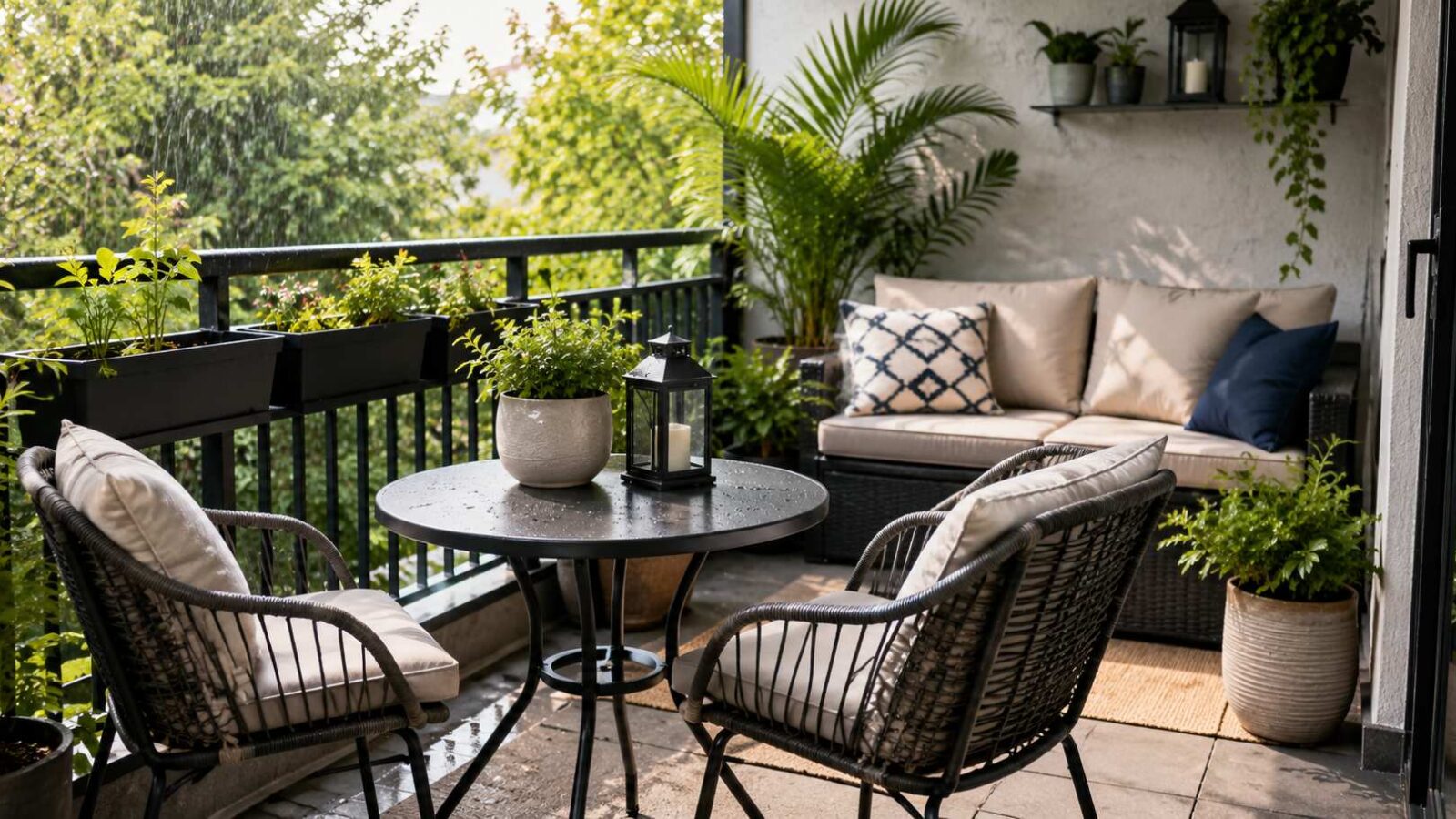
- Two chairs and a small round table: easy to move and well suited to conversation.
- A compact bench against a wall: preserves floor space and can add hidden storage if designed for outdoor use.
- A narrow dining set: practical for meals where depth is limited.
- One lounge chair plus a side table: often more comfortable than forcing a full set into a tiny balcony.
Use the same scale first approach found in the dining table guide. The best set is not the one with the most seats; it is the one that still leaves room to move.
Check construction before style
Look underneath the furniture. Fasteners should be suitable for outdoor exposure, welds should be consistent and joints should not wobble. Water should be able to drain rather than collect inside tubes, seat pans or timber joints.
For folding furniture, open and close every item. Pinch points, weak locks and rough edges are reasons to choose another product.
A realistic maintenance routine
Brush off leaves and dirt before they hold moisture against the surface. Wash according to the manufacturer’s instructions and avoid harsh cleaners that damage coatings or fabric treatments. Tighten loose fasteners at the beginning and end of the season.
Use breathable covers that fit securely. A loose cover can flap against finishes, while a sealed cover placed over damp cushions may trap moisture.
Before placing the order
- Confirm the set fits through the building, lift, gate or balcony door.
- Check weight if furniture must be moved indoors regularly.
- Read the care instructions and warranty exclusions.
- Look for replacement cushions or covers.
- Search the model or manufacturer in the product recall database.
Outdoor furniture is easiest to own when it matches the weather and the way the space is used. Choose materials for exposure, keep the layout open and buy only the seating that will be used.