A first tool kit should solve common household problems without turning a cupboard into a miniature hardware shop. The aim is not to own every tool. It is to have the right basic item when a hinge loosens, a picture needs hanging or a flat pack arrives with vague instructions.
The twelve tools that cover most small jobs
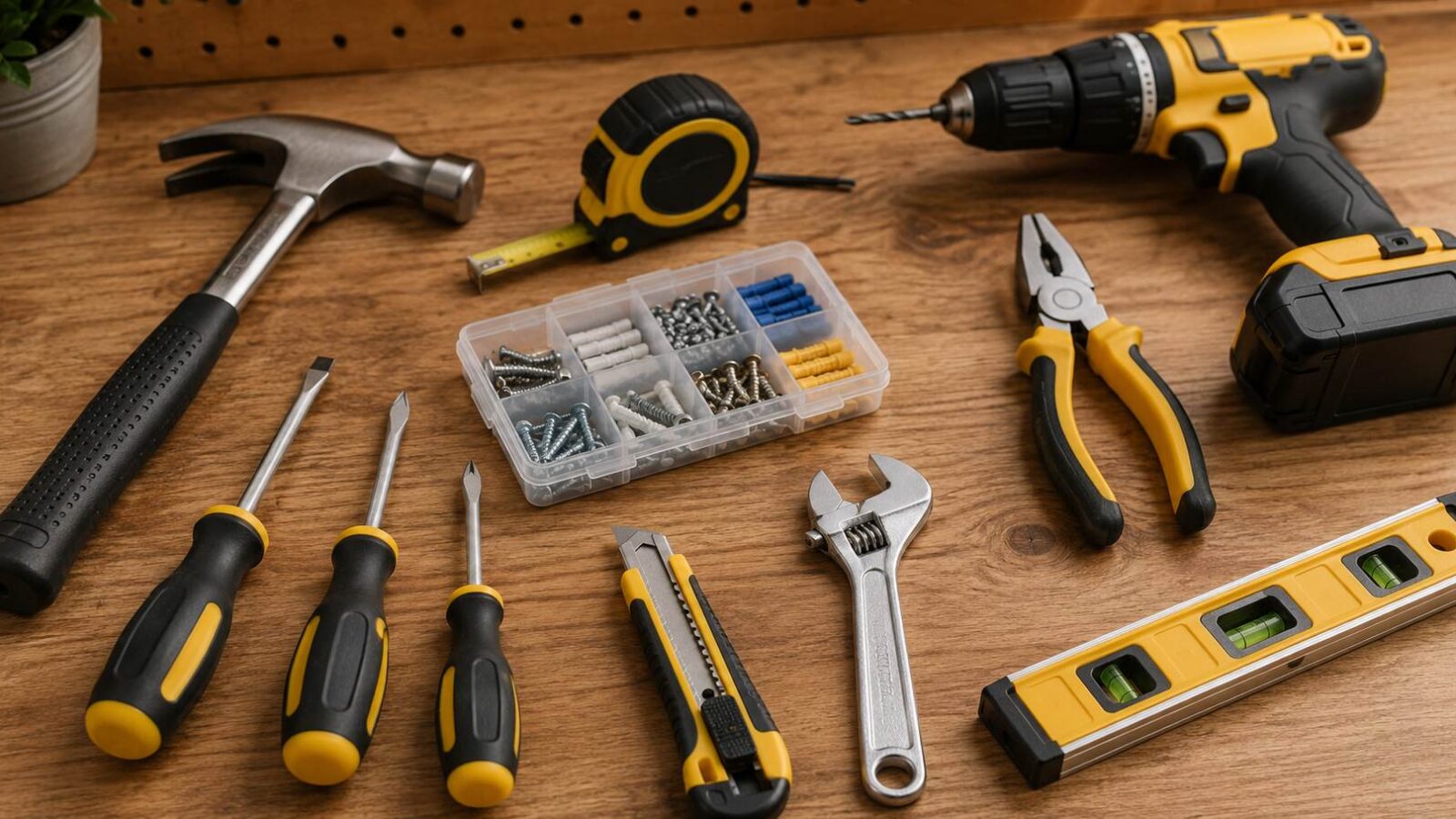
- Claw hammer: choose a comfortable general purpose size rather than the heaviest model.
- Multi bit screwdriver: useful for common Phillips, slotted and Torx fasteners.
- Tape measure: a locking model around five metres or sixteen feet handles furniture and room measurements.
- Combination pliers: for gripping, bending and light cutting.
- Adjustable spanner: helpful for nuts, small plumbing fittings and furniture hardware.
- Utility knife: for packaging, trimming and scoring, with spare blades stored safely.
- Spirit level: a short level is easier to store and accurate enough for shelves and frames.
- Hex key set: many furniture fittings use metric hex bolts.
- Small handsaw: useful for occasional timber or trim cuts.
- Flashlight or headlamp: repairs rarely happen in perfect light.
- Protective glasses: essential when drilling, cutting or working overhead.
- A sturdy toolbox: tools are only useful when they can be found.
Add a drill when the jobs justify it
A cordless drill driver is usually the first power tool worth buying. It speeds up furniture assembly, pilot holes and light fixing work. A compact model is easier to control than a large professional drill.
Buy a small set of suitable drill and driver bits rather than a huge case filled with duplicates. Wall material matters: plasterboard, masonry, tile and timber require different bits and fixings. When uncertain about wiring or pipes behind a wall, stop and investigate before drilling.
Build small job kits instead of one tangled box
Keep picture hooks, wall plugs, screws and felt furniture pads in labelled containers. Store painting tools together. Put frequently used screwdrivers and the tape measure at the top of the toolbox.
This simple organisation prevents a five minute repair from becoming a search through loose blades and mixed fasteners. The same principle makes larger storage areas easier to maintain, as explained in the room by room decluttering guide.
What can wait
Skip specialist tools until a real task requires them. A circular saw, angle grinder, large socket set or plumbing torch may sit unused for years and can create safety risks in inexperienced hands. Renting or borrowing an uncommon tool is often more sensible than buying a cheap version.
Do not save money on the parts that protect you
Safety glasses should fit well and remain clear. A step ladder should be stable and rated for the user and task. Extension leads should suit the tool and location. Replace damaged cords, cracked handles and mushroomed striking surfaces.
Wear hearing, breathing or hand protection when the job and product instructions call for it. Gloves are useful for many tasks, but they can be unsafe around some rotating machinery, so follow the tool manual.
Three tools that are often bought badly
The cheapest tape measure
A weak lock and hard to read markings make every measurement frustrating. Choose a tape that retracts smoothly and is easy to read in the units you normally use.
An oversized hammer
More weight does not mean more control. A balanced household hammer is safer for hanging pictures and assembling simple items.
A giant bit set
Large bargain sets often contain soft bits that round off quickly. A smaller set of common sizes from a reliable maker is easier to use and replace.
Keep a basic repair notebook
Record paint colours, filter sizes, appliance model numbers and the type of fixings used in each room. Photograph hidden cable routes before closing a repair. These notes save time when the same maintenance job returns months later.
Know the boundary between DIY and professional work
Basic tools do not make every job appropriate for a beginner. Fixed electrical work, gas systems, structural changes, serious water leaks and suspected asbestos or lead hazards may require licensed or trained professionals. Local rules differ, so check before beginning.
For manageable surface work, guides such as DIY wall painting and drywall repair can help you plan the tools and preparation.
The useful kit is the one you understand
Buy slowly, learn what each tool is designed to do and return it to the same place after use. A modest kit with sharp blades, complete bits and safe handles is far more useful than a crowded box of unfamiliar equipment.