Most decluttering attempts fail the same way: you try to do the entire house in one heroic weekend, burn out halfway through the second room, and end up with everything in piles and nowhere to put it. Decluttering sticks when you do it calmly, one room at a time, with a clear method and a plan for where things go. Done that way it is not a punishing purge but a steady reset that leaves your home easier to clean, easier to find things in, and noticeably calmer to be in. Here is a room-by-room approach that works in everyday use.
The mindset that helps most is that decluttering is subtraction in service of a calmer home, not deprivation. You are keeping what earns its place, not punishing yourself.
The method that works in every room
Use the same simple process in each space, which removes the overwhelm of reinventing your approach room to room.
- Work in one small zone at a time, a single drawer, shelf, or cupboard, not a whole room at once.
- Take everything out so you see what you in practice have.
- Sort into clear categories: keep, donate or sell, relocate to another room, and discard.
- Be honest about the keep pile, asking whether you have used it in the last year and would replace it if lost.
- Put the keepers back with a logical home before moving to the next zone.
Go room by room
Kitchen
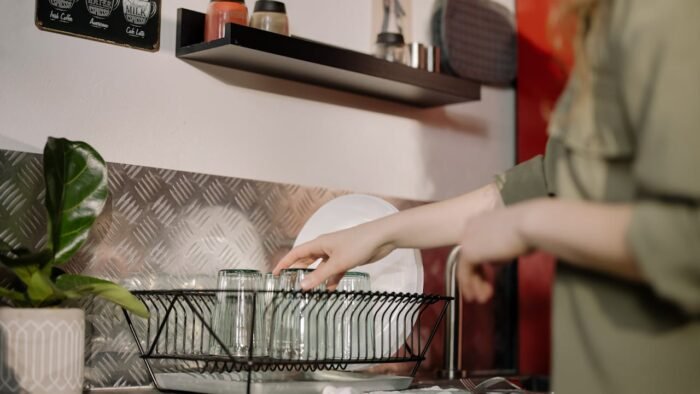
Start with expired food, duplicate utensils, and gadgets you never use. The kitchen rewards decluttering fast, and it feeds directly into organizing a small kitchen once the excess is gone.
Bedroom and closet
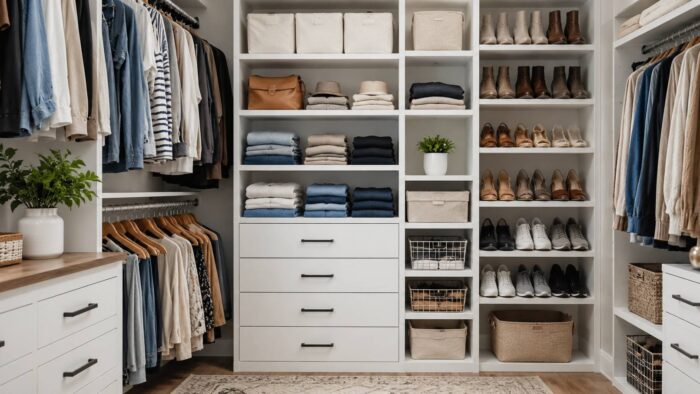
Clothes are where most clutter hides. Apply the reverse-hanger test and seasonal honesty, the heart of lasting closet organization, and a calmer bedroom supports better rest too.
Living room
Tackle surfaces, media, and the catch-all drawers and baskets where odds and ends accumulate. Aim for clear surfaces, which do more for a room’s calm than any decor.
Bathroom
Discard expired products and medicines and the half-used bottles you will never finish. It is quick and immediately satisfying.
Entryway and miscellaneous
Deal with the shoes, bags, and paper that pile up by the door, and the famous junk drawer. These small wins build momentum for the bigger rooms.
Decide where things in practice go
Decluttering only sticks if the things leaving your home in practice leave. Bag up donations and put them in the car so they go on your next trip, not back into a cupboard. List anything worth selling promptly rather than letting it linger. Recycle and dispose of the rest responsibly. The gap between “decluttered” and “cluttered again” is usually a pile of donation bags sitting in the hall for three months.
Keep it from creeping back
A decluttered home drifts back unless you change the inflow. Adopt a simple one-in, one-out habit for categories like clothes and kitchenware, do a quick reset of high-traffic surfaces regularly, and pause before buying to ask where an item will live. Only after the excess is gone does it make sense to invest in storage, since organizing less stuff is far easier and you avoid buying bins for things you should not keep.
The hard categories: paper and sentimental items
Two categories defeat most decluttering efforts, so they deserve their own approach.
- Paper: deal with it at the source, recycling junk mail immediately, and keep one folder or box for documents you genuinely must retain, digitizing what you can.
- Sentimental items: do not start here, since they are the hardest. Build your decluttering muscle on easy categories first, then return to them.
- For keepsakes, choose a defined box and keep only what fits, rather than letting sentiment fill the whole home.
- Photograph items you want to remember but do not need to keep, preserving the memory without the object.
Handling these last, once you have momentum, makes them far less daunting than tackling them cold.
Decluttering habits that send clutter in circles
- Trying to declutter the whole house at once and burning out.
- Pulling everything out without a plan, then living in the resulting chaos.
- Letting donation bags and sell piles linger until they creep back in.
- Buying storage before decluttering, so you organize things you should let go.
- Treating it as a one-time event rather than an ongoing habit.
Decluttering questions that stop indecision
Where should I start decluttering?
With one small, easy zone like a single drawer or shelf, ideally somewhere with obvious excess such as the kitchen or bathroom. An early win builds the momentum to tackle harder rooms.
How do I declutter without feeling wasteful?
Donate or sell usable items so they go to someone who needs them rather than to landfill. Reframing decluttering as passing things on, not throwing them away, makes letting go far easier.
How do I stop clutter from coming back?
Change the inflow: adopt a one-in, one-out rule, reset surfaces regularly, and pause before buying to ask where an item will live. Maintenance habits matter more than any single big purge.
How long does it take to declutter a whole home?
Longer than a weekend, and that is fine. Worked calmly one zone at a time, a whole home might take several weeks of short sessions rather than one exhausting marathon, and that steadier pace is exactly why it sticks. A single drawer takes minutes; a full closet or kitchen might take an afternoon. Spreading it out keeps the decisions from becoming overwhelming and lets new habits form alongside the sorting, so the home stays decluttered rather than rebounding the moment the big push is over.
Give every kept item a realistic home
The hardest part of decluttering is not the sorting; it is letting go of things you keep out of guilt, the unused gift, the just-in-case item, the version of yourself you thought you would become. Be gentle but honest: those objects are taking up space and mental load, and someone else could use them now. Start with one easy drawer to feel the lightness of a cleared space, and let that feeling, rather than a brutal weekend purge, carry you through the rest of the home. Momentum, not willpower, is what finishes the job; each cleared space makes the next one feel less like a chore and more like a relief you want to repeat.
The goal is a lighter routine, not an empty house
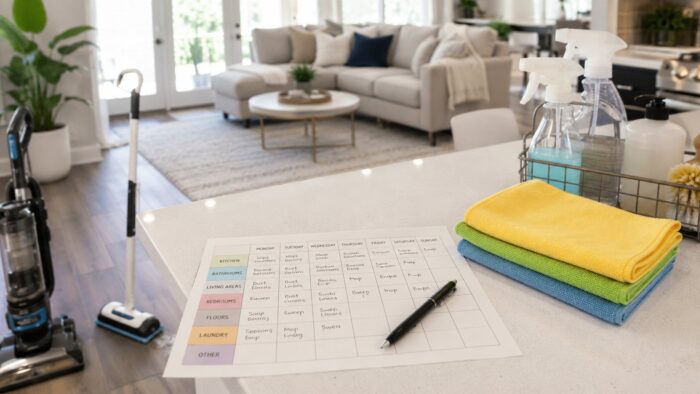
Declutter calmly and room by room rather than all at once: work in small zones, sort into clear categories, be honest about what you keep, and get the discards out of the house quickly. Then change your buying habits so it does not creep back, and add storage only once the excess is gone. The result is a home that is easier to clean, whether you maintain it with a robot or a stick vacuum, lighter to live in, and far simpler to keep that way.