Most closet makeovers look fantastic for about two weeks and then quietly collapse back into chaos. The reason is almost always the same: people buy matching bins and velvet hangers before doing the one thing that in practice makes organization last, which is reducing what goes in the closet in the first place. A closet is a fixed volume, and no amount of clever storage changes the fact that too much stuff in too little space will always overflow. Organize in the right order and the closet stays tidy; skip the first step and you will be back here in a month.
The goal is a closet where everything has a home and putting things away is effortless. That is a function of having the right amount of stuff far more than the right number of bins.
Edit first, always
Before buying a single organizer, take everything out and sort honestly. The same principle that drives decluttering a whole home applies in concentrated form here: keep what you wear and love, donate what you do not, and be ruthless about the things you are keeping out of guilt or “just in case.” A useful test is the reverse-hanger trick: turn all hangers backward, and after a season, anything still backward has not been worn and is a candidate to go. You cannot organize your way out of owning too much.
Use the full height of the closet
Most closets waste the space above the top shelf and below the hanging clothes. Reclaiming it roughly doubles usable storage.
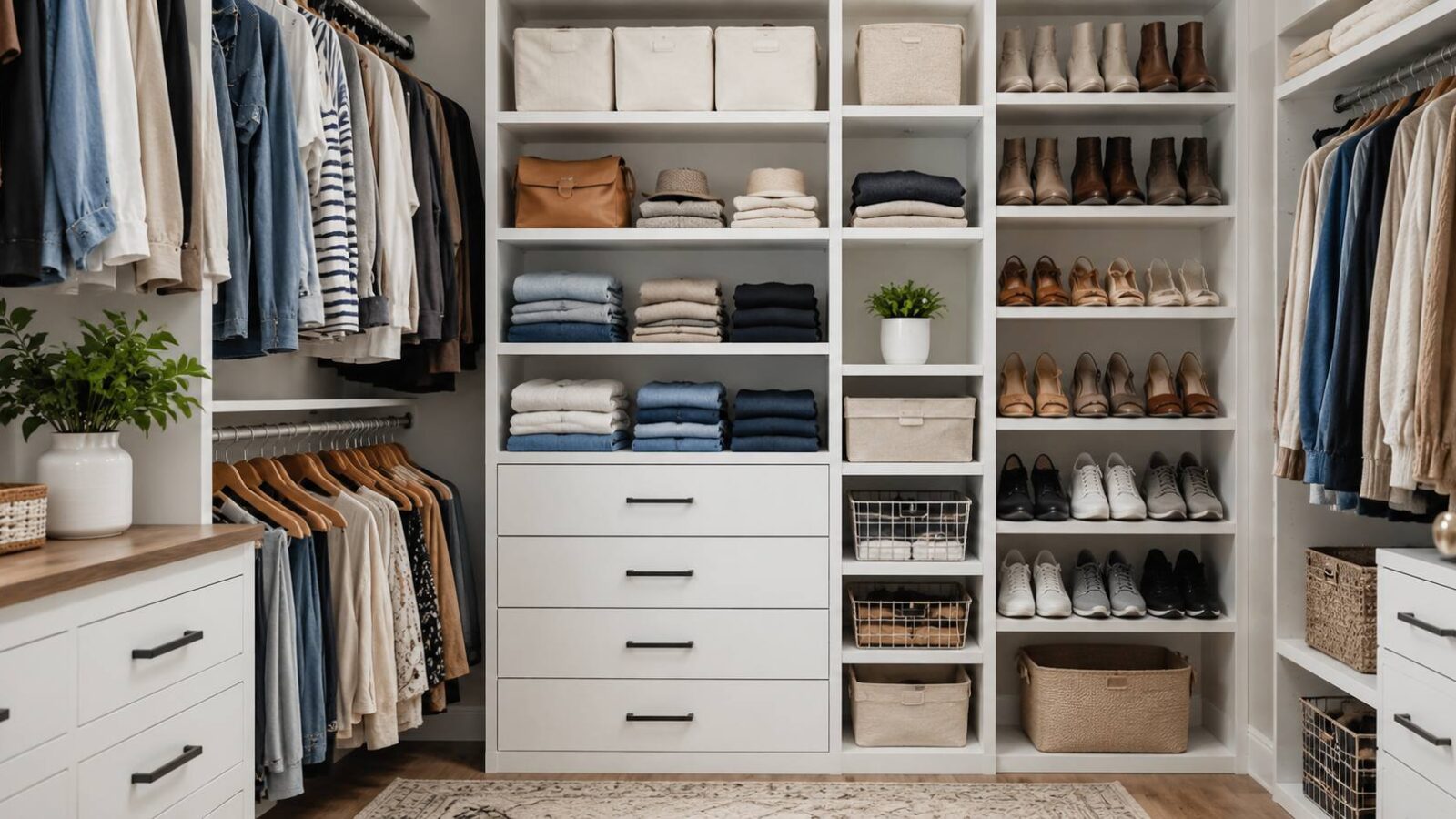
- Add a second hanging rod beneath the first for shirts and folded trousers, where long items are not needed.
- Use the high shelf for out-of-season and rarely used items in labeled bins.
- Add stackable drawers or shoe storage in the dead floor space below hanging clothes.
- Install hooks on the side walls and back of the door for bags, belts, and accessories.
- Use slim, uniform hangers, which save real width and make the closet look calmer.
Zone it by type and frequency
Group like with like, then place things by how often you reach for them. Everyday clothes go at eye level and within easy reach; occasional and seasonal items go high or low. Keep categories together so you can find and return things without thinking: shirts with shirts, trousers with trousers, shoes in one place. A closet organized by zones stays organized because putting an item back has an obvious, single destination.
Make it easy to maintain
The best system is the one you will keep up, which means it has to be low-effort. Leave a little breathing room rather than packing every inch, since a crammed closet is hard to use and quick to collapse. Use open bins and clear fronts where you can, so you are not fighting lids every morning. The discipline mirrors keeping a small kitchen organized: edit regularly, store by frequency of use, and resist the slow creep of new stuff.
Shoes, accessories, and seasonal rotation
The items that create the most visible clutter are usually shoes and accessories, and seasonal clothes you are storing in the wrong place.
- Give shoes a defined home, a rack, cubbies, or clear boxes, rather than a pile on the floor.
- Store accessories where you can see them: hooks for bags and belts, a tray or divided drawer for small items.
- Rotate seasonally, moving off-season clothes to high shelves or under-bed storage so the closet only holds what you wear now.
- Label opaque bins so the contents are not a mystery you have to unpack to check.
A seasonal rotation alone can make a cramped closet feel twice the size, because half the contents simply are not competing for space at any given time.
If your closet keeps reverting to chaos no matter how many times you tidy it, the message is not that you need better storage; it is that you own more than the space can hold. The most durable closet organization is subtractive. Do one honest edit, set up simple zones with a little room to spare, and the closet will largely keep itself in order. Add bins only to solve a specific problem you can see after editing, not as the first move. Think of the closet as a living system rather than a finished project: it works when the amount going in matches the space, and it drifts whenever that balance slips. Keep an eye on that balance and the occasional quick tidy is all it ever needs.
Closet questions to solve before buying bins
What is the first step to organizing a closet?
Empty it completely and edit. Remove anything you do not wear or need before buying organizers, because no storage system fixes a closet that simply contains too much.
How do I get more storage out of a small closet?
Use the full height: add a second rod, store seasonal items up high, use the floor space with drawers or shoe racks, add hooks on walls and the door, and switch to slim uniform hangers.
How do I keep a closet organized long term?
Keep zones simple, leave a little breathing room, use open and clear storage for easy access, and edit regularly. Maintenance is a habit, not a one-time project.
How often should I declutter my closet?
A thorough edit once or twice a year, ideally at the change of seasons, keeps a closet from creeping back into chaos, with a quick five-minute tidy every few weeks in between. The seasonal switch is a natural trigger: as you rotate clothes in and out, it takes little extra effort to set aside anything you did not wear last season for donation. Little and often beats a single exhausting overhaul, because the closet never gets far enough out of control to feel daunting, and the habit is what keeps any storage system working long term.
Why closet systems stop working
- Buying organizers before editing, so you neatly store clothes you never wear.
- Ignoring the vertical and floor space and cramming everything onto one rod and shelf.
- Packing the closet so full that putting anything away is a struggle.
- Using mismatched, lidded bins that make daily access annoying.
- Treating organization as a one-time event rather than a habit of regular editing.
A usable closet is not a full closet
A closet stays organized when you own the right amount, use the full height and floor, zone by type and frequency, and keep the system easy to maintain. Edit first, add storage second, and leave a little room to breathe. Do that and the closet will look as good in six months as it does the day you finish, which is more than most makeovers can claim.