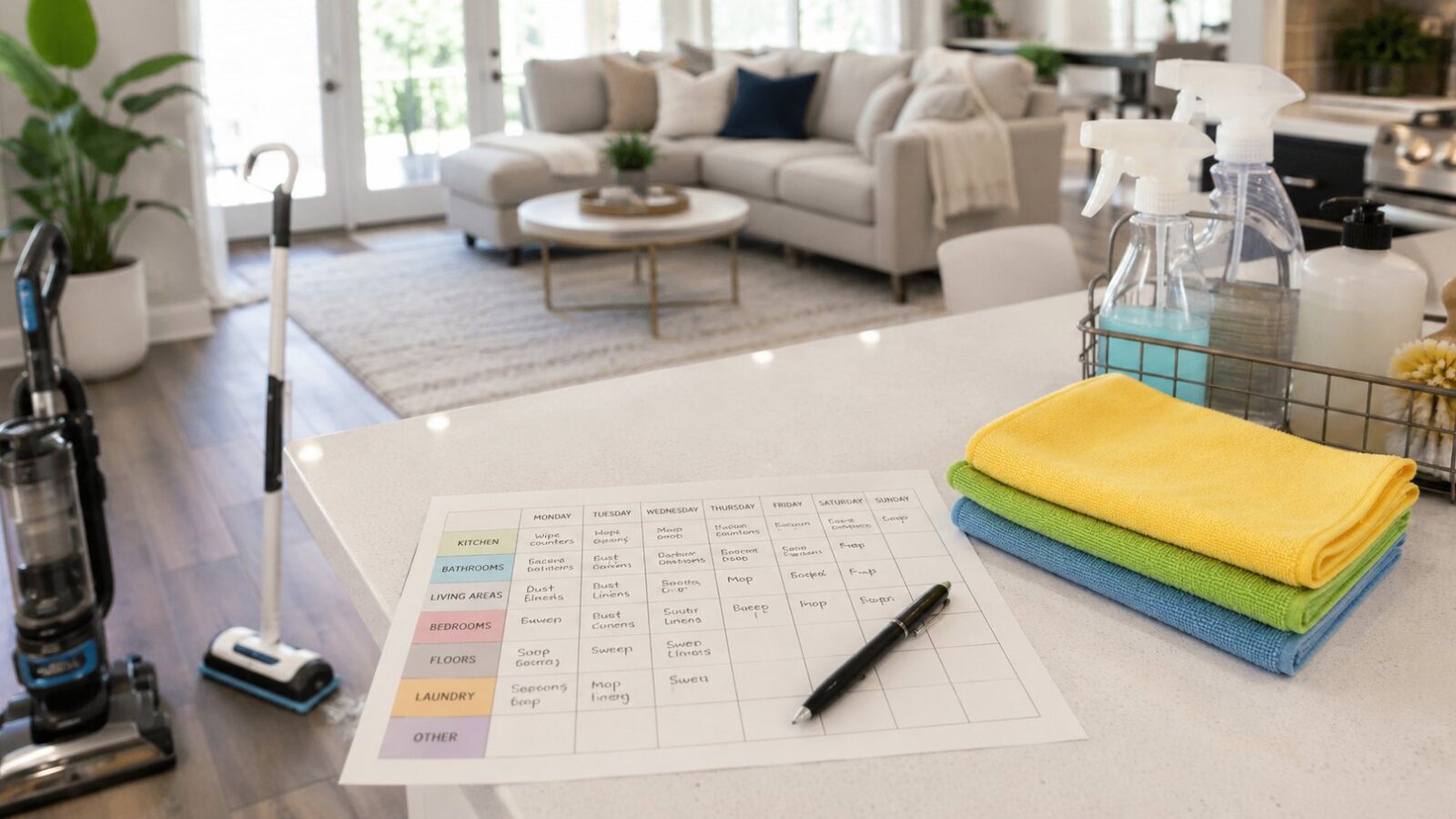
A cleaning plan only works when it survives a difficult week. The useful version is not a perfect timetable that assumes every evening is free. It is a light routine that keeps dirt, laundry and clutter from building into a weekend project.
The schedule below is designed for a typical busy household. It separates daily resets from deeper jobs, leaves room for missed days and avoids cleaning the same surface more often than it needs.
Start with a ten minute daily reset
Before assigning jobs to days, choose a small reset that happens most evenings. Set a timer, return loose items to their rooms, clear the kitchen counter, load or unload the dishwasher and put obvious rubbish in the bin. Stop when the timer ends.
This is not the time for scrubbing grout or reorganising cupboards. The goal is to prevent tomorrow from starting with yesterday’s mess. Homes that feel permanently untidy often need a reset habit more than another storage product.
A flexible week that covers the whole home
Monday: laundry and bedrooms
Gather clothing, towels and bedding first so loads can run while you handle smaller tasks. Put away clean laundry before starting another load. A basket of folded clothes left on a chair is still unfinished work.
- Change sheets if they are due.
- Dust bedside surfaces and lamps.
- Empty bedroom bins.
- Return clothes to the wardrobe or hamper.
When clothing storage is the real problem, use the principles in the closet organisation guide rather than buying more boxes.
Tuesday: bathrooms
Wipe mirrors, clean the basin and taps, scrub the toilet and rinse the shower or bath. Work from the least dirty area to the most dirty one, using separate cloths where appropriate. Keep ventilation running while surfaces dry.
Do not combine cleaning chemicals. Follow the product label, especially for disinfectants, bleach products and descalers.
Wednesday: floors
Vacuum high traffic areas, then mop hard floors that need it. Move light chairs and baskets, but do not turn the job into a furniture rearrangement. A robot or stick vacuum can reduce the effort, although neither replaces occasional edge and corner cleaning.
Thursday: kitchen detail
Clean the hob, microwave interior, appliance handles and the fronts of frequently touched cupboards. Check the refrigerator for food that needs using soon. Wipe spills before they harden rather than waiting for a full refrigerator clean.
If the counters are difficult to clear, revisit the small kitchen organisation plan. Daily cleaning becomes much easier when every appliance and utensil has a sensible home.
Friday: living areas
Dust from higher surfaces to lower ones, straighten cushions, wipe tables and remove items that migrated into the room during the week. Vacuum upholstered furniture when crumbs, pet hair or dust make it necessary.
Saturday: one rotating job
Choose only one task that does not need weekly attention. Rotating jobs might include wiping skirting boards, cleaning windows, washing bin containers, dusting ceiling fans, checking pantry dates or cleaning behind one appliance.
Keeping the list to one job prevents the weekend from becoming an unpaid cleaning shift.
Sunday: prepare rather than deep clean
Restock toilet paper, hand soap, dishwasher supplies and laundry products. Empty bags, sort post and plan meals. A small preparation session often saves more time than another hour of cleaning.
How to recover after missing a day
Do not move every missed task forward. That creates a queue that makes the schedule feel impossible. Instead, complete the daily reset, handle anything unhygienic or urgent, then continue with the current day. The missed job can wait for its next slot or replace Saturday’s rotating task.
Match the schedule to the household
Homes with pets, young children, allergies or muddy outdoor access may need more frequent floor cleaning. A single person in a small flat may need far less. Frequency should follow use, not social media cleaning calendars.
Split work by ownership rather than by vague requests to help. One person can own bathrooms, another can own floors, and children can manage age appropriate tasks such as putting toys away or sorting laundry.
A short supply list is easier to maintain
- Microfibre or washable cleaning cloths
- A general surface cleaner suitable for the materials in the home
- Bathroom cleaner or descaler where needed
- Dish soap, a scrub brush and gloves
- A vacuum, broom and mop suited to the floors
- Clearly labelled products stored away from children and pets
A crowded cupboard of specialised products often creates confusion. Start with the few products that safely handle most routine jobs and add something only when a particular surface requires it.
Make the plan easy to see
Keep the weekly list on the refrigerator, inside a utility cupboard or in a shared phone note. Mark the rotating Saturday job so nobody has to remember what was done last month.
The best cleaning schedule is not the strictest one. It is the one that keeps the home comfortable without consuming the household’s free time.