The fifteen-piece knife block is one of the great marketing successes in kitchenware, and one of the great wastes of money. In almost any home kitchen, three knives do well over ninety percent of the work, and the rest of the block sits untouched, dulling slowly while taking up counter space. Buying fewer, better knives and learning to keep them sharp will improve your cooking more than any gadget. Here are the knives that in practice earn their place, how to choose them, and how to make them last.
Spend the budget you would have wasted on the full block on two or three good knives instead. Your prep will be faster, safer, and far more pleasant.
The three knives you in practice need
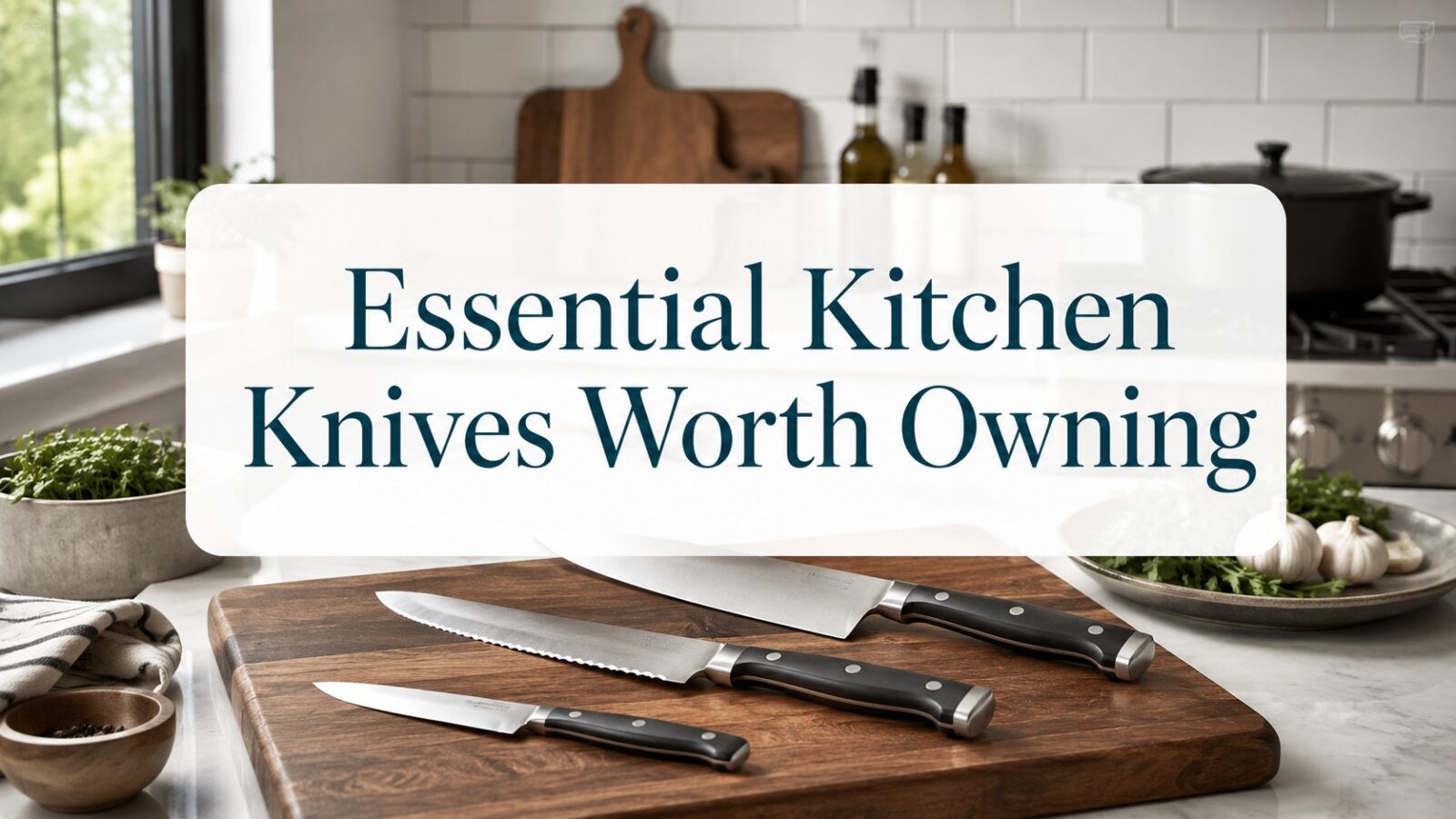
A chef’s knife
The workhorse, and the one to spend the most on. A 7 to 8 inch chef’s knife handles chopping, slicing, dicing, and most prep tasks. If you buy only one knife, make it a good chef’s knife that feels balanced and comfortable in your hand, since you will reach for it constantly.
A paring knife
A small knife for the precise jobs a chef’s knife is too big for: peeling, trimming, hulling, and detail work. Inexpensive and indispensable, it is the second knife everyone needs.
A serrated bread knife
The long-toothed blade that slices bread without crushing it, and also handles tomatoes, citrus, and anything with a tough skin and soft interior. A serrated edge cannot easily be sharpened at home, but a decent one lasts years.
Nice to have, not essential
- A utility knife, a mid-size blade between a chef’s and a paring knife, handy but not vital.
- A santoku, an alternative to the chef’s knife with a slightly different feel; a matter of preference.
- A boning or filleting knife, only worth it if you regularly break down whole meat or fish.
- Kitchen shears, genuinely useful for many tasks and arguably more essential than a fourth knife.
How to choose a knife
Feel matters more than brand. A knife should feel balanced and comfortable in your grip, neither too heavy nor too light, with a handle that suits your hand. If you can, hold it before buying. Beyond feel, look for a full tang, where the blade steel runs through the handle, for durability and balance, and a quality steel that holds an edge. You do not need the most expensive option; a solid mid-range chef’s knife that feels right will serve you for decades.
Keeping knives sharp and safe
A sharp knife is a safe knife, because a dull one slips and forces you to press harder. Caring for knives is simple but non-negotiable:
- Hone with a steel regularly to keep the edge aligned, and sharpen properly when honing no longer helps.
- Hand wash and dry knives immediately; the dishwasher dulls edges and damages handles.
- Store them in a block, on a magnetic strip, or in a drawer guard, never loose in a drawer.
- Use a wooden or plastic cutting board, not glass or stone, which destroy edges fast.
A magnetic strip is also a space-saver, freeing a drawer in line with smart small-kitchen organization.
A knife is only as good as its board
The cutting surface you use matters almost as much as the blade, because the wrong board dulls a knife with every cut and the right one protects the edge.
- Use wood or soft plastic boards, which give slightly under the blade and preserve the edge.
- Never cut on glass, stone, or metal surfaces, which blunt and even chip a knife rapidly.
- Keep a separate board for raw meat for hygiene, and wash boards promptly after use.
- A large, stable board makes prep safer and faster, so it is worth the counter space.
Good knives, a good board, and a sharp edge turn prep into one of the genuine pleasures of cooking, alongside the other countertop tools worth owning like a capable air fryer for fast weeknight meals.
Knife buying habits that waste money
- Buying a big knife block and using only two or three of the knives.
- Spending on a matching set instead of one excellent chef’s knife.
- Letting knives go dull, which is both frustrating and dangerous.
- Putting good knives in the dishwasher or storing them loose in a drawer.
- Cutting on glass or stone surfaces that ruin the edge.
A sharp small set beats a dull large block
Put your money into one chef’s knife and a sharpening habit, and ignore the sets entirely. A single well-made chef’s knife, kept sharp, will outperform a whole block of neglected blades and make every prep task quicker and more enjoyable. The knife block is sold as a complete kitchen; in practice it is mostly storage for knives you never use. Buy three good knives, learn to hone and sharpen them, and you are better equipped than most home cooks. The pleasure of cutting with a genuinely sharp knife,
Kitchen knife questions for everyday cooks
How many kitchen knives do I really need?
Three: a chef’s knife, a paring knife, and a serrated bread knife. Together they handle the vast majority of home cooking. Add a utility knife or shears only if you find a specific need.
How much should I spend on a chef’s knife?
A solid mid-range knife that feels balanced in your hand is enough for most cooks and will last for years. Spend more here than on other knives, but you do not need the most expensive option.
How do I keep my knives sharp?
Hone regularly with a steel to realign the edge, sharpen properly when honing stops helping, hand wash and dry the knives, and cut on wood or plastic rather than glass or stone.
What is the difference between honing and sharpening?
They are often confused but do different things. Honing, with a honing steel, realigns the fine edge that bends slightly with use, and it should be done frequently, even every few uses, to keep a sharp knife performing. Sharpening in practice removes a little metal to grind a new edge, and it is needed far less often, only when honing no longer restores the sharpness. Think of honing as routine maintenance between meals and sharpening as the occasional tune-up, whether you do it yourself with a whetstone or have it done professionally.
Start with fewer, better knives
Skip the knife block and buy three good knives: a chef’s knife to do most of the work, a paring knife for detail, and a serrated knife for bread and soft-skinned foods. Choose by feel, store them properly, and keep them sharp. A small set of well-maintained knives will serve you better, and for less money, than any oversized set ever could.