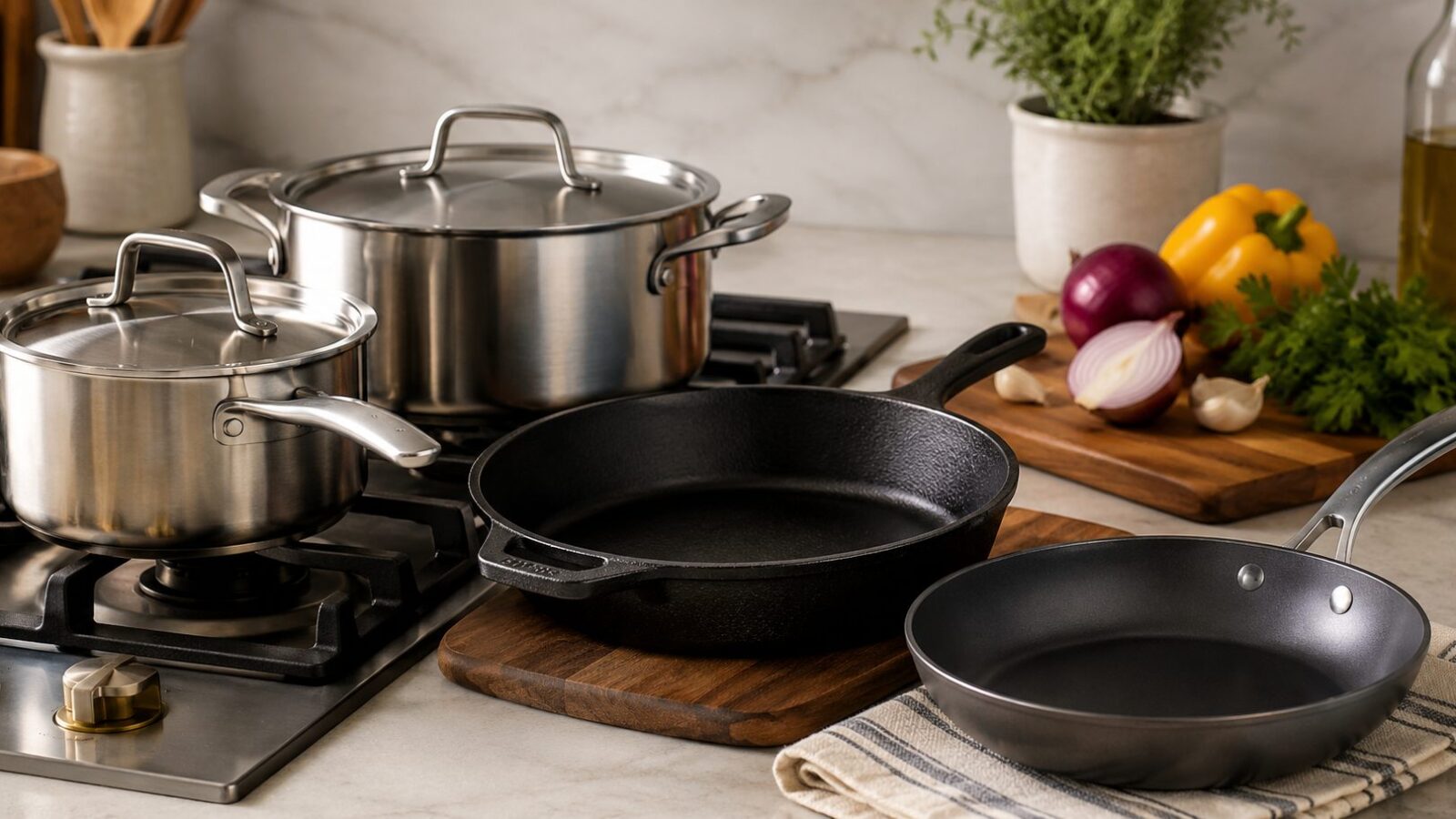
Cookware is easier to choose when you stop looking for one material that does everything. Stainless steel, cast iron and nonstick each solve a different cooking problem. A useful kitchen usually needs a small mix rather than a matching ten piece set.
Start with the food you cook most often
Think through a normal week. Eggs and delicate fish favour a low stick surface. Browning meat and building pan sauces suit stainless steel. High heat searing, shallow frying and oven cooking are natural jobs for cast iron.
The goal is to match the pan to the technique, not to collect every available size.
Stainless steel: the dependable everyday option
Good stainless steel cookware is durable, nonreactive and suitable for many cooking methods. It handles browning, sautéing, boiling and sauce making without the surface wearing away.
Look for a base or fully clad construction that spreads heat beyond a thin hot spot. A pan with poor heat distribution can scorch food in the centre while the edges remain cool.
Where stainless steel works best
- Browning meat and vegetables
- Making pan sauces after searing
- Cooking acidic foods such as tomato based sauces
- Boiling pasta, grains and soups
- Recipes that move from hob to oven, when handles and lids are oven safe
Why food sticks
Stainless steel requires timing. Preheat the pan moderately, add fat, then add food after the fat is hot. Moving meat too early can tear the surface; it often releases more easily after a crust forms. Excessive heat is not the answer and may burn the oil.
Cast iron: excellent heat retention with more care
Cast iron heats slowly and holds heat well. That makes it useful for searing, cornbread, roasting and dishes that benefit from steady heat. It is heavy, and large pans can be difficult to lift when full.
Traditional bare cast iron needs seasoning and prompt drying. Enamelled cast iron is easier with acidic foods and does not need seasoning, but the coating can chip if handled roughly.
Choose cast iron when
- You want strong browning and heat retention.
- The pan will move from hob to oven.
- You are comfortable drying and maintaining the surface.
- The weight is manageable for everyone who will use it.
Use protection on delicate worktops and check whether the cookware is suitable for the hob. Heavy pans should be lifted rather than dragged across glass surfaces.
Nonstick: useful, but not a lifetime pan
Nonstick cookware makes low fat cooking and delicate foods easier. It is especially convenient for eggs, pancakes and some fish. The coating is a wear surface, so even a good pan will not last like stainless steel or cast iron.
Use utensils recommended by the manufacturer, avoid empty high heat preheating and replace a pan when the coating is badly scratched, peeling or no longer performs as intended.
Avoid paying for a full nonstick set
Most households need one small skillet and perhaps one larger frying pan. Saucepans and stockpots rarely benefit enough from nonstick coating to justify replacing them when the surface wears.
What about carbon steel?
Carbon steel sits between stainless steel and cast iron. It can develop a seasoned, relatively low stick surface and is lighter than thick cast iron, but it still needs drying and maintenance. It is worth considering for frequent high heat frying or wok style cooking.
A practical four piece cookware plan
- A medium stainless steel saucepan with a lid
- A larger stainless steel sauté pan or frying pan
- A small nonstick skillet for eggs and delicate food
- A cast iron or carbon steel pan for searing and oven use
Add a stockpot only if you regularly cook large batches. Buy pieces separately when a set contains sizes you will not use.
Handles, lids and storage change daily use
Hold the pan before buying if possible. The handle should feel balanced with the pan empty and provide enough clearance from heat. Check oven temperature limits for handles, knobs and lids.
Stacking protectors can reduce scratching, but a pan that is too heavy or awkward to reach will be used less often. The small kitchen organisation guide offers ideas for vertical dividers and accessible pan storage.
Cleaning without damaging the surface
Let hot cookware cool before washing. Sudden temperature changes can warp some pans. Follow the maker’s instructions for dishwasher use, seasoning and stain removal. Do not use abrasive pads on coated nonstick surfaces.
For food safety, wash utensils, boards and cookware that contact raw meat, poultry, seafood or eggs before using them for ready to eat food. The kitchen knife guide also covers safe prep habits and useful knife sizes.
Buy for the job, not the display
Stainless steel is the versatile base, cast iron provides heat retention and nonstick earns its place for delicate cooking. A few well chosen pans are easier to store, clean and replace than a large set built around appearance.