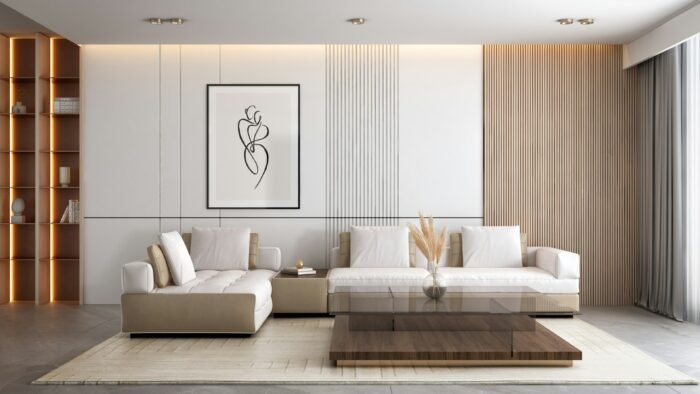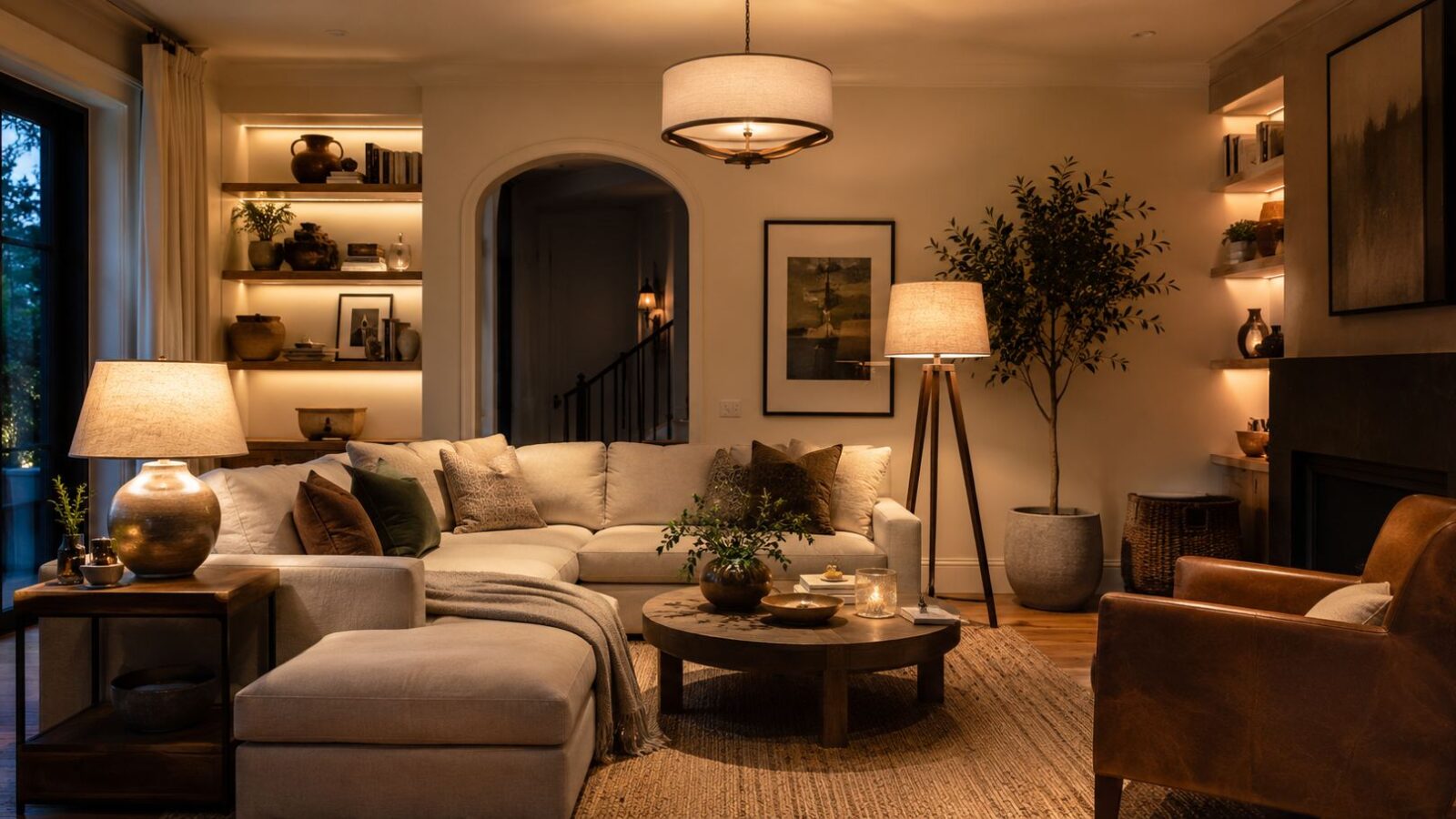
A room can be beautifully furnished and still feel flat if every light comes from one ceiling fixture. Layered lighting solves that problem by giving different jobs to different sources: general light for moving around, focused light for reading or work, and softer light that adds depth.
You do not need a renovation to improve the balance. Most living rooms can be transformed with better lamp placement, sensible bulb choices and one or two controllable circuits.
Begin with an evening lighting audit
Turn on the lights you normally use and walk into the room from the doorway. Notice dark corners, glare on the television, shadows on faces and seating that is too dim for reading. Then switch lights off one at a time to see what each source contributes.
The audit prevents random lamp buying. It also reveals whether the problem is brightness, placement or colour temperature.
The first layer: comfortable general light
General light should let people move around safely without making the room feel like an office. A ceiling fixture can provide this layer, but it does not have to carry the entire room.
If the overhead light is harsh, use a lower appropriate output, a diffuser or a dimmer that is compatible with both the fixture and bulb. In a rental, a plug in floor lamp that throws light upward can soften the room without electrical work.
The second layer: light where a task happens
Place task lighting beside the activity rather than simply adding brighter bulbs everywhere.
- A reading chair needs a lamp that sends light over the shoulder or beside the seat.
- A desk needs even light that does not create screen glare.
- A craft table benefits from a wide, accurate beam.
- A piano, game table or homework area may need its own source.
A useful task lamp is adjustable and easy to switch on from the seat. If using a floor lamp, make sure the base does not interrupt the main walking path.
The third layer: light that shapes the room
Accent light draws attention to a wall, plant, shelf or artwork. It can also brighten a dark corner so the room appears wider. This layer should be quieter than the task lighting.
A small lamp on a console, a wall washer behind a plant or a picture light above artwork can add depth. The gallery wall guide explains how to position art before deciding where an accent light belongs.
Choose brightness by lumens, not watts
Watts describe energy use, while lumens describe light output. Compare lumen figures when replacing bulbs. A shaded lamp may need a different output from an exposed fixture because the shade absorbs and redirects light.
Do not chase a single room total. Multiple lower output sources usually create a more comfortable living room than one very bright central fixture.
Use colour temperature deliberately
Warm white light commonly suits living rooms because it supports a relaxed atmosphere and works well with timber, warm fabrics and skin tones. Neutral or cooler light can be helpful for detailed tasks, but mixing very different colour temperatures in the same sight line may look unsettled.
Test one bulb before replacing every lamp. Paint colour, daylight and shade material can change how the light appears.
Control matters as much as the fixture
Put lamps on accessible switches, smart plugs or compatible dimmers so the room can change between reading, conversation and television use. A lighting plan that requires walking behind furniture to reach switches will not be used as intended.
For app controlled lighting, begin with one area and keep a physical control available. The smart lighting guide covers compatibility, hubs and simple starter setups.
A sample plan for a medium living room
- Use the ceiling fixture at a moderate level for cleaning and general movement.
- Place a floor lamp beside the main reading seat.
- Add a small table lamp near the opposite side of the room.
- Use one low accent light on a shelf or behind a plant.
- Group controls so the evening scene can be set quickly.
This arrangement creates several pools of light rather than one bright centre and dark edges.
Common placement checks
- No bare bulb shines directly into a seated person’s eyes.
- Shades conceal the lamp at normal viewing height.
- Cords do not cross doorways or walking paths.
- Fixtures and dimmers are rated for the chosen bulbs.
- Lamps are stable around children and pets.
Let the room change through the day
Daylight should do as much work as possible, while evening lighting should support the room’s actual activities. A successful plan feels flexible: bright enough to find a dropped object, focused enough to read, and soft enough to relax.