A rug that is too small is the single most common decorating mistake in the average home. It is so common that designers have a name for the look: the “postage stamp,” a little island of rug stranded in the middle of the floor with all the furniture marooned around it. The fix costs nothing but knowledge, because the right rug size follows a handful of simple rules. Get the size right and a room instantly looks intentional and pulled together; get it wrong and even an expensive rug makes the space feel cheap and disjointed.
The instinct to “save money” with a smaller rug is exactly what causes the problem. In rugs, going one size up is almost always the better call.
The golden rule: bigger than you think
Whatever size you are picturing, the correct rug is usually larger. A rug should anchor and connect the furniture in a seating or dining area, not float separately from it. As a baseline, leave a consistent border of bare floor around the rug, roughly 8 to 18 inches between the rug edge and the walls, so the rug frames the room rather than wall-to-wall carpeting it. Within that, size up rather than down.
Living room rug sizes
There are three accepted layouts, in rough order of how polished they look.
- All legs on: the rug is large enough that every piece of furniture sits fully on it. The most cohesive look, and worth it in a larger room.
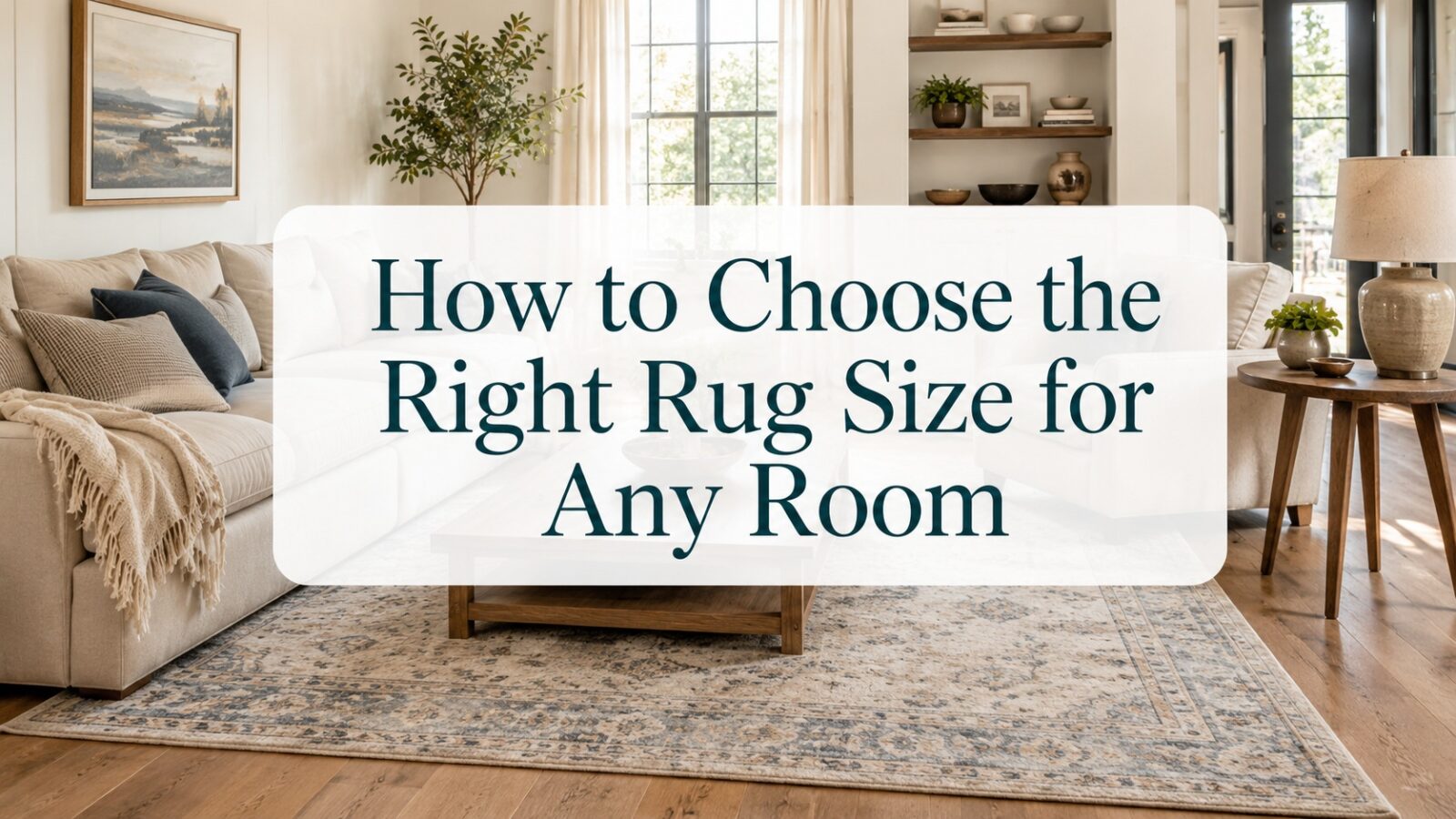
- Front legs on: the rug runs under the front legs of the sofa and chairs, tying them to the rug while saving some size. The most popular and forgiving option.
- Front legs of the sofa only: acceptable in small rooms, but keep the rug wide enough to reach beyond the sofa arms so it does not look skimpy.
Whatever the layout, the rug should at least span the width of the sofa and extend beyond its arms. A rug narrower than the sofa is the classic postage-stamp error.
Dining room rug sizes
The rule here is simple and absolute: the rug must be large enough that all chairs stay fully on it even when pulled out. That means extending the rug at least 24 to 30 inches beyond every edge of the dining table. A rug that chairs catch on as they slide back is worse than no rug at all, so measure the table with chairs pulled out before you buy.
Bedroom rug sizes
In the bedroom, the goal is something soft underfoot when you get out of bed. The most luxurious option is a large rug that sits under the lower two-thirds of the bed and extends well past the sides and foot. If budget or size is tight, runners on each side of the bed, or a rug under just the foot, give the comfort without the cost of a single huge piece.
How to make a too-small rug work
If you already own a rug that is slightly small, layering it over a larger, plain natural-fiber rug like jute can rescue the look and add texture, which dovetails with the natural-material direction in current interior design trends. It is a cheaper fix than replacing the rug, and the layered effect often looks more considered than a single rug would.
Runners, entryways, and odd spaces
Not every space is a neat rectangle, and a few extra rules cover the rest of the home.
- In a hallway, leave a few inches of floor on each side and centre the runner, choosing a length that stops short of both ends rather than running wall to wall.
- In an entryway, a smaller flat-weave rug that handles dirt and is easy to clean beats a plush one.
- In a kitchen, runners along the main work path add comfort underfoot; keep them low-pile and washable.
- Under a desk or reading chair, size the rug so the chair stays on it as it rolls or rocks back.
The border principle still applies everywhere: a consistent margin of visible floor makes any rug look deliberate rather than accidental.
When you are between two rug sizes, buy the larger one almost every time. The most frequent regret in rug shopping is going too small to save money, and the second most frequent is realizing it only after the rug is unrolled and cannot be returned. Measure your furniture layout, add the borders, and let the bigger size win the tie. A correctly sized rug does more to make a room look designed than almost any other single purchase.
Rug placement errors that shrink a room
- Buying the postage-stamp rug that floats in the center with furniture stranded around it.
- Choosing a rug narrower than the sofa it sits in front of.
- Using a dining rug too small to keep chairs on it when pulled out.
- Leaving an inconsistent or nonexistent border of floor around the rug.
- Prioritizing price over size, which makes even a good rug look cheap.
The room decides the rug
Rug sizing comes down to one principle: go bigger than feels natural. Anchor the furniture rather than floating between it, span wider than the sofa, keep all dining chairs on the rug, and leave an even border of floor at the edges. Follow those rules and a single correctly sized rug will pull a room together more effectively than almost anything else you can buy.
Rug sizing questions by room
What size rug do I need for my living room?
Large enough to sit under at least the front legs of all the seating and to span wider than the sofa. In bigger rooms, aim for every piece of furniture to rest fully on the rug.
How big should a dining room rug be?
It should extend 24 to 30 inches beyond every edge of the table so all chairs remain on the rug even when pulled out for seating.
Should a rug touch the walls?
No. Leave a border of bare floor, roughly 8 to 18 inches to the walls, so the rug frames the space. A rug running to the walls reads as wall-to-wall carpet rather than an area rug.
Which rug material should I choose?
Match the fiber to the room’s traffic and your tolerance for upkeep. Wool is soft, durable, and naturally stain-resistant, making it the premium all-rounder for living rooms and bedrooms. Synthetics like polypropylene are cheaper, hard-wearing, and easy to clean, which suits high-traffic areas and homes with kids or pets. Natural fibers like jute add texture and work well as a base layer but feel rougher underfoot. In dining rooms and entryways, choose a low-pile, washable rug that copes with spills and dirt, and save plush, high-pile rugs for low-traffic spots where comfort matters more than cleaning.