The sofa is the single largest object in most living rooms, often a quarter to a third of the visual mass in the room. In a small space, that makes it the one purchase you cannot afford to get wrong. Pick a sofa that is too deep or too bulky and the whole room feels cramped no matter how you arrange everything else. Pick the right one and a 150-square-foot living room can feel calm and generous. When square footage is tight, a few measurements matter far more than showroom styling.
Most sofa-buying advice ignores dimensions and talks about style. For a small room, the order is reversed: measurements first, then comfort, then looks. Get the footprint right and almost any style can be made to work.
What “small” means in sofa terms
A standard three-seater runs 84 to 96 inches long and 36 to 40 inches deep. For a small living room, the target is roughly 72 to 84 inches long and 33 to 36 inches deep. That single inch off the depth changes what fits around the sofa far more than people expect, because depth eats into the walking space in front of it.
Measure the room before you shop, not after. Subtract a walking path of about 30 inches in front of the sofa, around 12 inches of clearance from side walls, and the swing radius of any nearby door. Whatever rectangle is left is the maximum footprint your sofa can occupy. Take that number to the store rather than guessing.
Sofa types ranked for small spaces
Apartment-size sofas
Marketed exactly as the name suggests, and the safest single choice for a room under about 12 by 14 feet. They use a three-cushion design at 70 to 78 inches with slim arms, usually track or English-style. You give up almost nothing in comfort and gain real floor space.
Loveseats and 2.5-seaters
At 56 to 70 inches, these seat two adults comfortably or three friends in a pinch. In a studio, a loveseat plus a single armchair is often a smarter layout than forcing in a full sofa, because it gives you flexible seating you can rearrange.
Sleeper sofas
The compromise category for anyone who hosts overnight guests. Smaller queen-sleeper models at 72 to 80 inches work in tight rooms; skip the oversized ones. Modern memory-foam sleepers are far more comfortable than the old box-spring pull-outs, a comfort gap similar to the one explained In the comparison of memory foam and innerspring mattresses.
Sectionals, with caution
Small-space sectionals do exist, generally around 90 by 60 inches or smaller, and they anchor a corner nicely. The catch is that they lock the room into one layout permanently. If you like to rearrange, a sectional is the wrong call.
What to look for
Visible legs
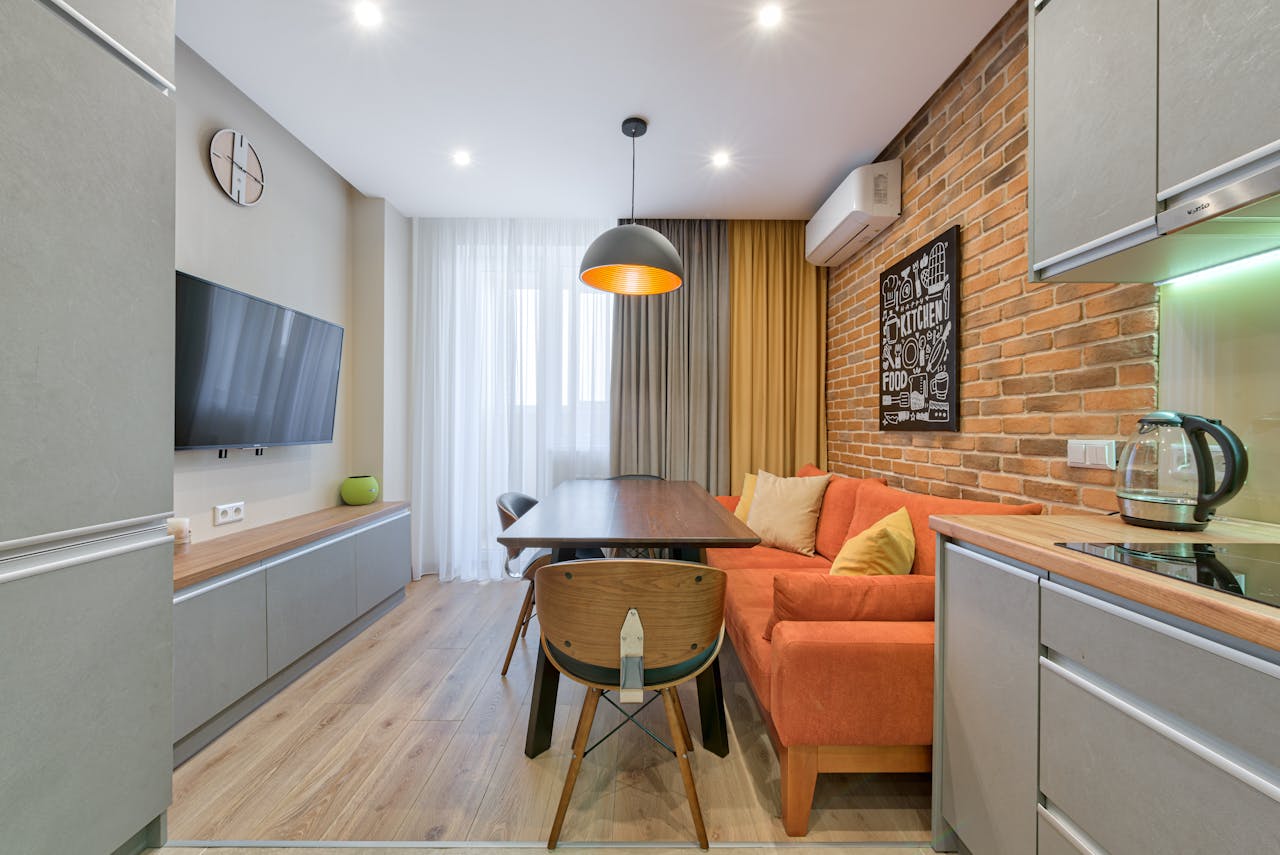
Legs of four inches or more let light and floor show beneath the sofa, which makes both the piece and the room feel larger. A skirted sofa that meets the floor visually swallows the space underneath it. Raised legs are one of the cheapest ways to make a small room read as bigger.
Arm style
Arms are where sofas quietly waste space. The most efficient options for a small room are:
- Track arms, slim and squared off, the most space-efficient and the most modern looking.
- English roll arms, slightly chunkier but still restrained, good for traditional rooms.
- Tuxedo arms, level with the back, distinctive but visually heavier.
- Avoid rolled or pillowed arms wider than about seven inches, which eat into the seat itself.
Back style
Tight backs and low profiles keep sight lines open across the room. Tall, overstuffed pillow backs are comfortable but they wall off the space behind them, which makes a small room feel boxed in.
Color, fabric, and making it feel bigger
Lighter, solid upholstery recedes and makes a room feel more open, while a large dark sofa becomes a heavy block. If you want a darker sofa, balance it with a light rug sized correctly for the room and pale walls. Performance fabrics in mid-tones hide wear without reading as heavy. The same restraint that works for a small sofa runs through the broader design choices worth making in 2026: fewer, lighter, better-scaled pieces.
Where to place a small-room sofa
Placement does almost as much work as the sofa itself. Floating a sofa a few inches off the wall, rather than jamming it against the plaster, paradoxically makes a room feel larger and more deliberate. Avoid blocking the main sight line from the doorway, since an unobstructed view across the room reads as space. If you have a window, keep the sofa back low enough not to cut across it. And resist the urge to line every wall with furniture; a small room feels bigger with one or two well-placed pieces and clear floor than with seating crammed around the entire perimeter.
Where small rooms usually go wrong
- Buying the sofa before measuring the room and the doorways it has to pass through.
- Choosing depth for lounging when the room cannot spare the walking space.
- Pushing a too-large sofa against a wall and assuming that solves the size problem.
- Picking a skirted, floor-touching base that visually shrinks the floor.
- Letting one oversized sectional dictate the only possible layout.
The measurement that matters most
If you remember one thing, make it the depth number. People obsess over length, but a sofa that is 40 inches deep in a small room steals the walking path and makes everything feel tight, while a 34-inch-deep model of the same length feels effortless. When in doubt, go shallower and slightly shorter than you think you need. A small room rewards a sofa that leaves air around it far more than one that maximizes seating.
Three sofa questions worth answering at home
What size sofa fits a small living room?
Aim for 72 to 84 inches long and 33 to 36 inches deep, then confirm it leaves a 30-inch walking path and clears your doorways. The exact number depends on your room’s leftover envelope after clearances.
Is a loveseat or a full sofa better for a studio?
Often a loveseat plus a chair. It seats the same number of people while giving you flexible, rearrangeable seating and more open floor than a single large sofa.
Do sofa legs really make a room look bigger?
Yes. Visible legs of four inches or more expose floor and let light pass underneath, which reads as more space. Skirted bases do the opposite.
A sofa that leaves breathing room
In a small living room the sofa is a measurement problem before it is a style problem. Target a shallower, slightly shorter frame, choose slim arms and visible legs, keep the upholstery light, and confirm the footprint against your room’s real clearances. Do that and the largest object in the room works with the space instead of against it.