Most design “trends” are forecasts written by companies that sell paint, fabric, or furniture, which is worth remembering before you repaint a room on someone’s say-so. A trend is only useful if it makes your home work better or feel better to live in, and if it will still look right in three years. With that filter in mind, here are the 2026 directions worth your time and money, and a few that are better admired in a magazine than installed in your house.
The through-line for 2026 is restraint and warmth: fewer pieces chosen better, natural materials over glossy ones, and rooms designed around how you in practice live rather than how they photograph.
Trends worth trying
Warm, earthy neutrals
The cool gray era is firmly over. Warmer neutrals such as putty, clay, mushroom, and soft terracotta make rooms feel inviting rather than clinical, and they flatter wood and natural light. They also age far better than a trend color, which matters because repainting is disruptive and a warm neutral is a safe long-term base you can layer onto.
Curves and softer shapes
Rounded sofas, arched mirrors, oval tables, and curved-back chairs are everywhere, and for once the trend is practical. Softer edges make small and busy rooms feel calmer, and they are genuinely safer in homes with children. You do not need to commit the whole room; one curved piece against straight lines does the work.
Natural materials and texture
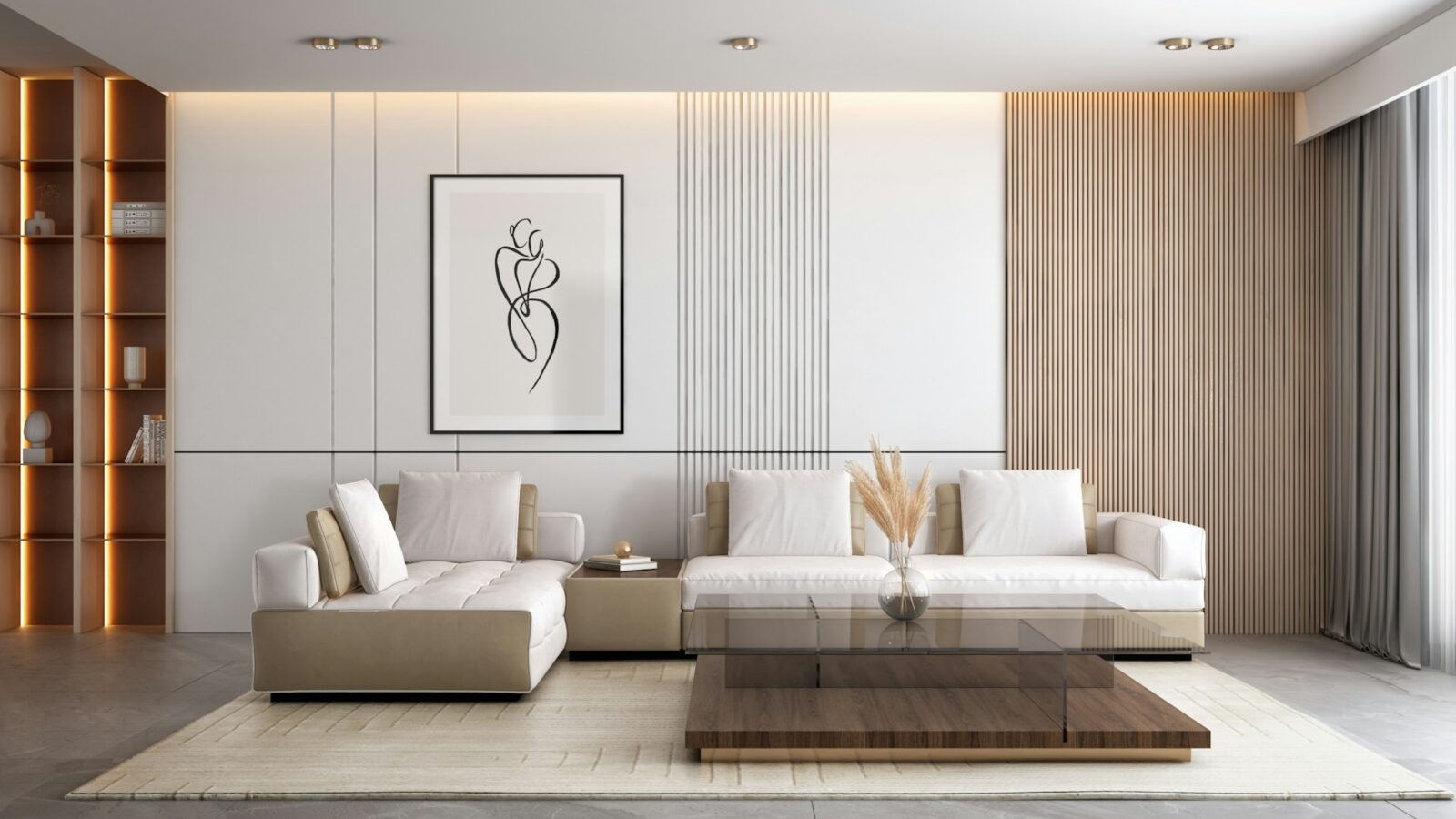
Wood, rattan, linen, wool, and stone are replacing high-gloss and plastic finishes. Texture is what keeps a neutral room from feeling flat, and natural materials bring warmth that color alone cannot. This pairs naturally with the move toward more indoor plants, which add living texture and soften hard architectural lines.
Considered, layered lighting
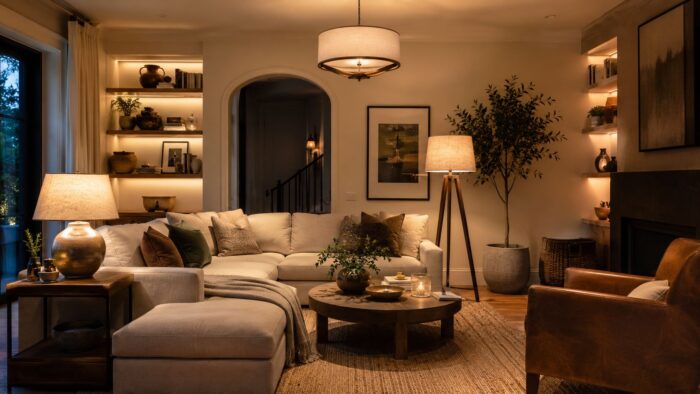
Single overhead fixtures are giving way to layered lighting: a mix of ambient, task, and accent sources, increasingly on smart controls. Good lighting changes how a room feels more than almost any decor, and the flexibility of dimmable, scene-based smart lighting is a large part of why this trend has staying power.
Trends to approach with caution
- All-over bold color drenching, where walls, trim, and ceiling are one saturated shade. Striking in photos, exhausting to live with and expensive to undo.
- Highly specific maximalist themes that date quickly and are hard to edit back.
- Trend-led furniture in cheap materials, which looks dated and worn within a couple of years.
- Open shelving in every room, which looks great styled and becomes clutter in daily life.
None of these are wrong, but they are commitments. Try them in a small, reversible way before you let them define a room.
How to adopt a trend without regret
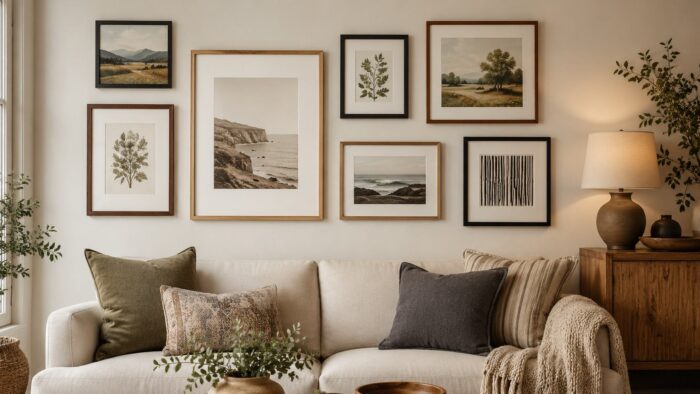
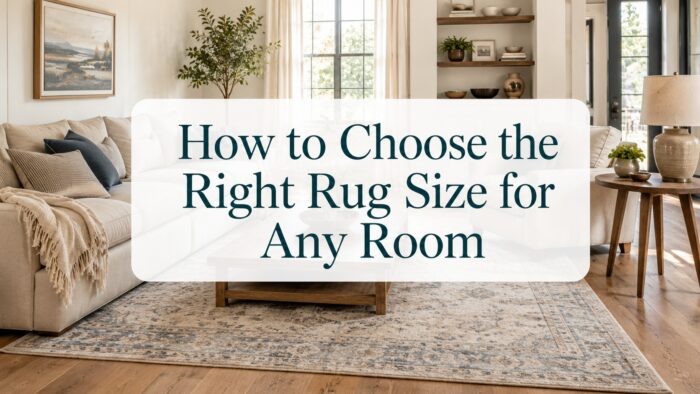
The safe approach is to keep the expensive, permanent things timeless and let the cheap, swappable things carry the trend. Walls, large furniture, and flooring should be neutral and durable; cushions, art, smaller decor, and a correctly sized rug are where you experiment. That way a trend you tire of costs you a few accessories, not a renovation. The same logic applies to a sofa: buy the frame timeless, add the trend with throws and pillows.
Test a trend before you commit
The cheapest way to avoid a design regret is to live with a trend in miniature before scaling it up. A few practical tests:
- Paint a large sample board, not just a swatch, and move it around the room across a full day to see the color in morning, afternoon, and lamplight.
- Bring in one curved or natural-material accent and live with it for a few weeks before buying a matching set.
- Try a trend in a low-stakes room, like a hallway or guest space, before committing the living room to it.
- Photograph the room with and without the change; the camera often reveals whether a trend is adding warmth or just noise.
If a trend still feels right after that, it is probably worth doing properly. If it already feels tiring in sample form, you just saved yourself a costly mistake.
The best-looking homes are rarely the most on-trend ones. They are the ones where someone made calm, consistent choices and added personality through a few well-chosen pieces. Use trends as a menu, not a rulebook. Pick the one or two that genuinely suit how you live, execute them in swappable items, and ignore the rest without guilt. The homes that look effortless are usually edited, not fully decorated; a few deliberate choices with room to breathe beat a catalog of trends competing for attention. If a room already feels good to be in, you do not owe any trend an update.
Trends that become expensive mistakes
- Repainting an entire home around a color that will feel dated in two years.
- Buying a full room of matching trend furniture instead of layering pieces over time.
- Chasing what photographs well rather than what is comfortable to live in.
- Ignoring lighting, then wondering why an on-trend room still feels flat.
Keep the trend, lose the pressure
The 2026 trends worth your money share a theme: warmth, natural materials, softer shapes, and better lighting, all in service of a calmer home. Adopt them through the things you can easily change, keep the big-ticket items neutral and durable, and you get a space that feels current now and still looks right years from now. That is the whole trick: current where it is cheap to change, timeless where it is not.
Questions to ask before following a design trend
Are gray interiors really out of style?
Cool, flat grays have faded in favor of warmer neutrals like putty and clay. Gray is not banned, but warm-toned greiges and earthy neutrals feel current and age better.
What is the cheapest way to update a room for 2026?
Swap soft furnishings and lighting. New cushions, a warm-toned rug, layered lamps, and a few plants shift a room’s whole mood for a fraction of the cost of furniture or paint.
Should I follow trends at all?
Only where they improve daily life or are easy to reverse. Keep permanent, costly elements timeless and let inexpensive accessories carry whatever trend appeals to you.
How do I make a rented home feel current without renovating?
Focus entirely on the removable layer. Warm-toned textiles, a well-sized rug, layered lamps instead of relying on the ceiling light, framed art, and a few plants will shift a rental’s whole feel without touching the walls or floors. Peel-and-stick options for backsplashes and shelf liners add personality and come off cleanly when you move. Because none of it is permanent, you can follow whatever direction appeals to you with no risk, and take most of it with you to the next place.