A lower waste cleaning routine is not about replacing every bottle with a homemade mixture. It is about using fewer products, choosing clear ingredient and performance information, buying formats that reduce unnecessary packaging and avoiding habits that create safety risks.
Use up suitable products before replacing them
Discarding a usable cleaner to buy a greener looking bottle creates waste without improving the current clean. Keep products that are appropriate for the surface, within date where relevant and safely stored. Replace them gradually as they are used.
Dispose of unwanted household chemicals according to local guidance. Do not pour concentrated products together or transfer them into unlabelled food containers.
Start with the job, not the scent
List the surfaces that need routine cleaning: sealed worktops, bathroom fittings, floors, glass, laundry and dishes. A small number of compatible products can often cover these jobs.
Fragrance is not proof of cleanliness. Strong scent can encourage overuse and may be uncomfortable for some household members. Fragrance free options are worth considering where sensitivity is a concern.
Look for meaningful product information
Terms such as natural, green and eco friendly can be vague. Prefer products with clear directions, ingredient disclosure where available and recognised third party criteria. In the United States, the EPA Safer Choice label identifies products whose ingredients and performance have been reviewed against the program’s requirements.
A label does not remove the need to follow instructions. Even a product with safer ingredients must be stored and used correctly.
Concentrates and refills can reduce packaging
Concentrated cleaners may use less packaging and transport weight, but only when diluted accurately. More product does not mean better cleaning. Use the measuring cap or specified container and keep the final solution labelled.
Refill systems work best when the bottle is durable, easy to clean and designed for repeated use. A thin disposable bottle refilled indefinitely may not be the safest option.
Reusable cloths need a laundry plan
Washable cloths reduce paper use, but they should be separated by task and cleaned thoroughly. Use different cloths for toilets, kitchen food areas and general dusting. Allow cloths to dry between uses rather than leaving them damp in a closed container.
Very dirty or contaminated materials may still require a disposable option. Lower waste should not come at the expense of hygiene.
Do not mix cleaning chemicals
Combining products can create dangerous fumes or unexpected reactions. Bleach should never be mixed with ammonia, acids or other cleaners. Use one product at a time, ventilate the area and rinse only when the label instructs you to do so.
Homemade mixtures are not automatically safer or more effective. Vinegar, acids and abrasives can damage natural stone, grout, metals, appliance seals and protective coatings.
Choose the least aggressive method that works
Start with dry removal, warm water or a mild suitable cleaner before reaching for a stronger product. Give the cleaner the stated contact or dwell time instead of increasing the amount.
Mechanical action matters. A well chosen brush, cloth or scraper can improve results without stronger chemistry, provided it is safe for the surface.
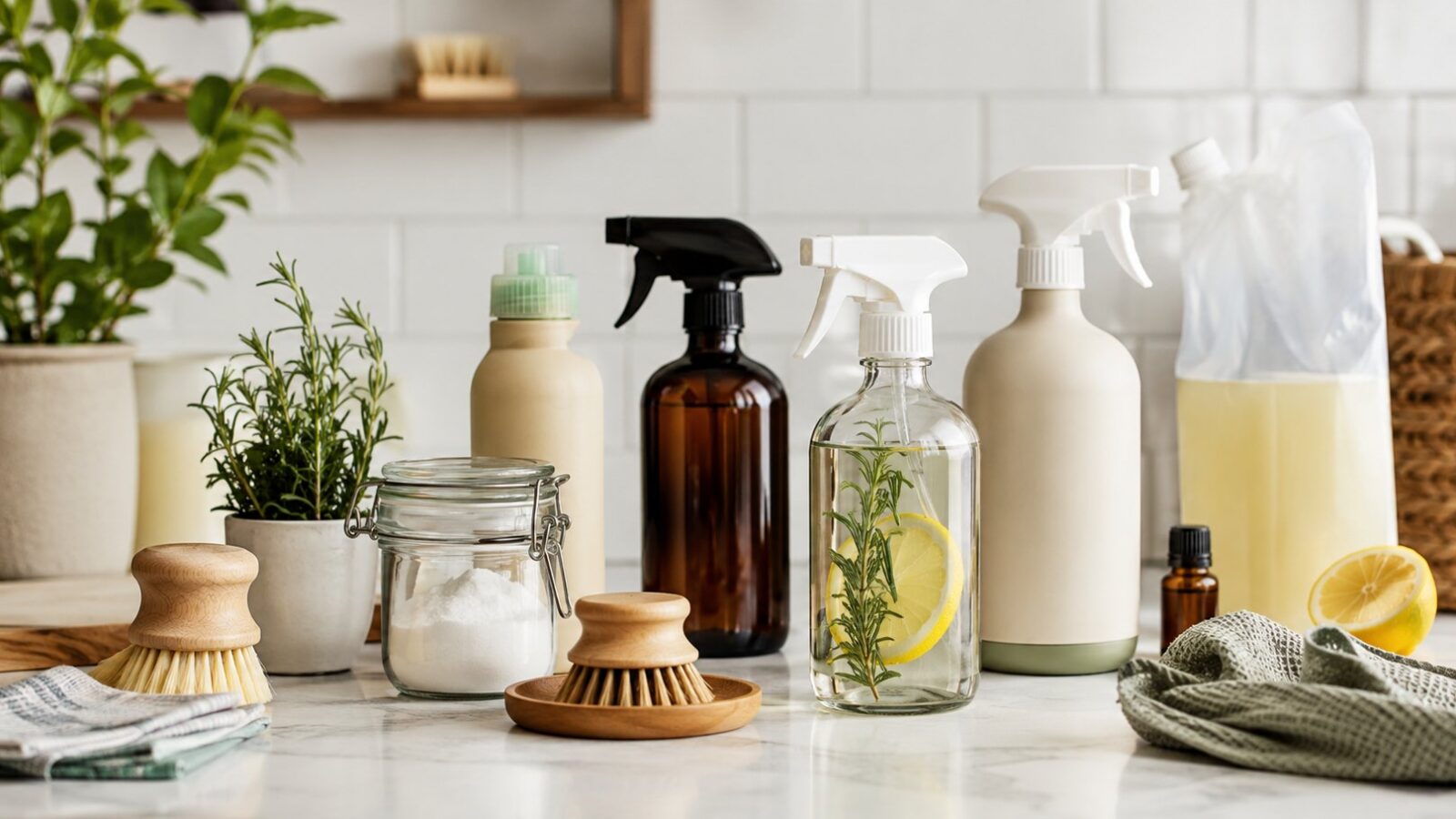
Create a compact cleaning station
- One general cleaner suitable for common sealed surfaces
- Dishwashing product
- Laundry detergent
- A bathroom product for soap scale or mineral deposits where needed
- Microfibre or washable cloths in separate colours
- A brush, non scratch scrubber and gloves
- Any specialist product required by a particular surface manufacturer
Store the station securely away from children and pets. The weekly cleaning schedule helps match this small kit to regular tasks without overcleaning.
Buy larger only when the product will be used
Bulk packaging can reduce cost and packaging per use, but not when half the product expires, leaks or becomes impossible to store safely. Choose a size based on real consumption and available secure storage.
Review the routine after one month
Notice which products were used, which remained untouched and where cleaning still took too long. The answer may be better organisation rather than another cleaner. Decluttering surfaces and storing tools near the job can reduce time and product use.
The room by room decluttering guide can help remove the items that make routine cleaning more complicated.
A sensible lower waste routine
Keep the products that work, use the correct amount, choose credible labels, refill only suitable containers and avoid unsafe mixtures. Sustainability is strongest when the routine is simple enough to continue and safe enough for everyone in the home.