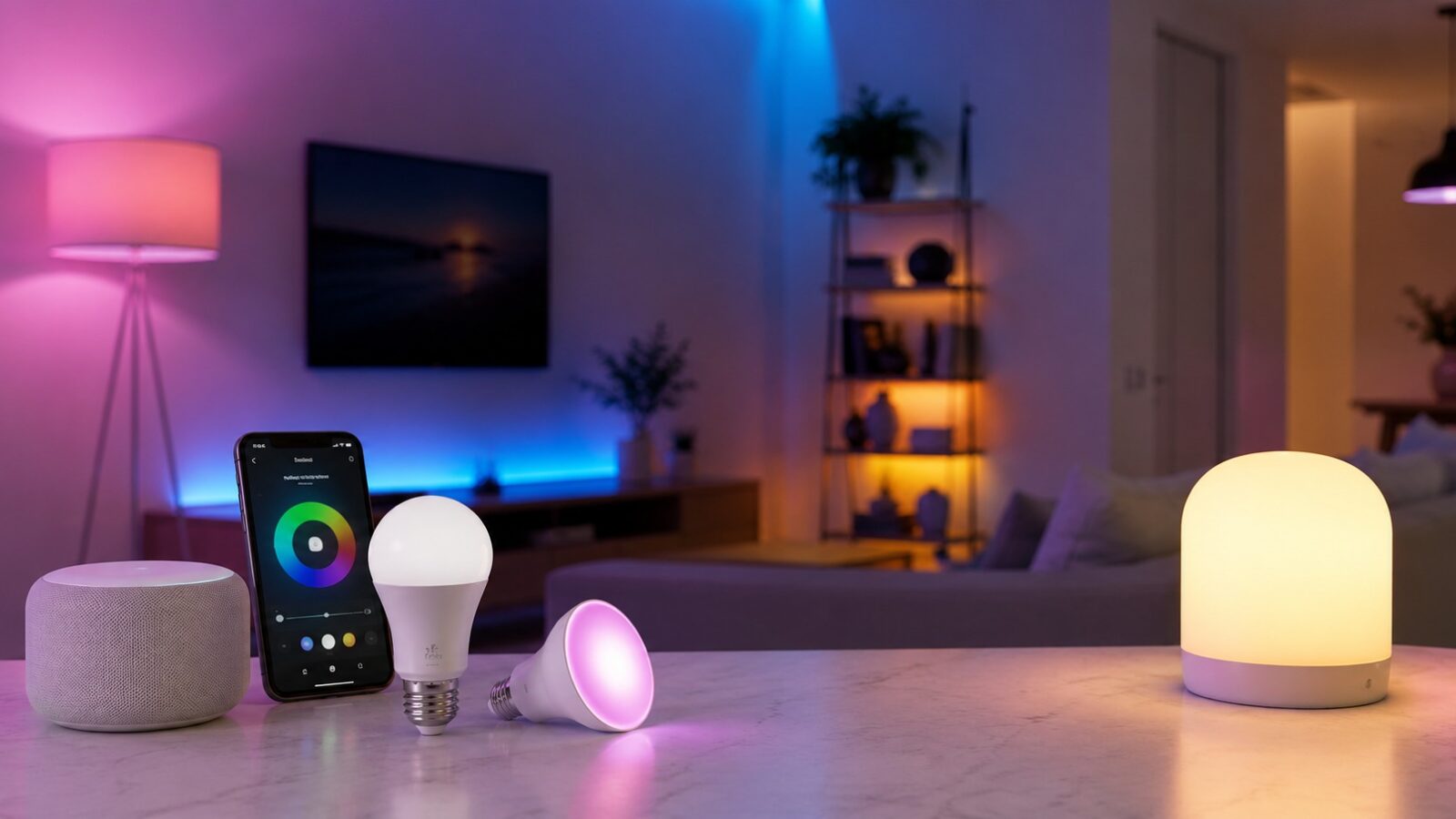
Smart lighting is the home automation upgrade people notice most and the easiest one to start with. Lights that come on at dusk, dim for the evening, and set a whole room’s mood with one tap change how a home feels far more than their modest cost suggests. It is also where many people begin building a smart home, because it is low-risk, low-cost, and immediately rewarding. The catch is that there are several ways to make lighting smart, and choosing the wrong one for your home leads to flicker, dead switches, and frustration. Here is how to start well.
The first decision is not which brand to buy; it is whether to make the bulbs smart, the switches smart, or both.
Smart bulbs, switches, or both?
Smart bulbs
The simplest entry point: screw them in, connect them, and you are running. They offer dimming and often color, and they are perfect for renters since nothing is wired. The catch is that they only work when the wall switch is on, so a guest flipping the switch off cuts the bulb’s power and its smarts. Best for lamps and rooms where the switch can stay on.
Smart switches
These replace the wall switch itself, making every bulb on the circuit smart while keeping the physical switch working normally. They are ideal for ceiling fixtures and rooms with many bulbs, and they avoid the switched-off-bulb problem. The trade-off is that they require wiring, may need a neutral wire, and suit owners more than renters.
Smart plugs for lamps
For floor and table lamps with simple on-off needs, a smart plug is the cheapest route of all, turning any ordinary lamp into a scheduled, voice-controlled one.
What to look for in smart bulbs
- Brightness, measured in lumens rather than watts, so you in practice get the light level you want.
- Color temperature range, from warm white for evenings to cool white for tasks, with tunable white being the most useful everyday feature.
- Full color only where you want it, such as accent lamps; most rooms just need good tunable white.
- Compatibility with your chosen ecosystem so everything lives in one app.
- A reliable connection standard, since cheap bulbs that drop offline are the top source of frustration.
Set up scenes and schedules
The magic of smart lighting is not controlling bulbs from your phone; that quickly feels like more effort than a switch. It is automation. Set lights to come on gently before sunset, dim in the evening to wind down, and switch to bright cool light for work or cleaning, all without you touching anything. Scenes that set several lights at once with one tap or voice command are what make the system feel genuinely smart, much like a thermostat that manages itself, which we cover in our look at smart thermostats.
Lighting as design, not just tech
Good lighting changes a room more than almost any decor, and layered, adjustable light is a large part of why it features so heavily in current interior design trends. Use smart lighting to build layers: ambient light for the room, task light where you work, vital in a home office set up around a supportive office chair, and accent light for mood. The ability to shift color temperature and brightness through the day is what turns a flat, single-source room into one that feels right morning and night.
Connection standards and reliability
The most common smart-lighting complaint is not features, it is bulbs that drop offline, and the connection type is usually why. A quick orientation helps you buy well:
- Wi-Fi bulbs connect directly with no hub, which is simple but can crowd your network if you add many.
- Hub-based systems use a low-power wireless standard and a small bridge, which tends to be the most reliable for larger setups.
- Newer cross-ecosystem standards aim to let devices from different brands work together, easing the lock-in that frustrates beginners.
- Whatever you choose, a strong home network underneath it all is what keeps lighting responsive.
For a handful of bulbs, direct Wi-Fi is fine; once you are lighting a whole home, a hub-based system usually pays off in reliability.
Smart lighting problems that are easy to prevent
- Putting smart bulbs behind a switch people will flip off, cutting their power and smarts.
- Buying cheap bulbs that constantly drop offline and sour the whole experience.
- Choosing color bulbs everywhere when most rooms only need tunable white.
- Controlling lights only by phone instead of setting up automatic schedules and scenes.
- Mixing incompatible brands and ecosystems so nothing coordinates.
Start with one switch or one lamp
Beginners almost always over-buy on color and under-invest in reliability. The color-changing party trick wears off in a week; what you in practice use every day is warm-to-cool tunable white on a sensible schedule. Spend on bulbs or switches that stay connected, set up two or three scenes and an evening dimming schedule, and put color only where it adds something. A small, reliable lighting setup you forget is automated beats a colorful one that keeps dropping offline.
Smart lighting questions for first time users
Are smart bulbs or smart switches better?
Smart bulbs are easiest and best for renters and lamps; smart switches are better for ceiling fixtures and rooms with many bulbs because the wall switch keeps working. Many homes use a mix.
Do smart bulbs work if the wall switch is off?
No. A smart bulb needs power, so if someone flips the wall switch off it loses both light and its smart features. Use smart switches, or keep the wall switch on, where that is a problem.
What should I look for in a smart bulb?
Adequate brightness in lumens, tunable white color temperature, compatibility with your ecosystem, and a reliable connection. Add full color only in accent locations where you will use it.
Do smart bulbs use electricity when they are off?
A small amount, yes. Because a smart bulb stays connected to the network even when the light is off, it draws a tiny standby current, but it is genuinely minor, usually a fraction of a watt per bulb. Over a whole home of smart bulbs it adds up to very little on your bill, and it is far outweighed by the savings from dimming, scheduling, and never leaving lights on by accident. If a particular bulb truly needs zero draw, that is a case for a smart switch instead, which controls an ordinary bulb.
Good smart lighting fades into the routine
Smart lighting is the best place to begin a smart home: cheap, low-risk, and immediately satisfying. Decide between smart bulbs, switches, and plugs based on your rooms and whether you rent, prioritize tunable white and a rock-solid connection over color gimmicks, and set up automatic schedules and scenes. Done that way, the lighting quietly improves every room from morning to night.