A balcony, even a small one, can grow a surprising amount once you choose plants suited to containers and to the light you in practice have. The mistake most beginners make is buying whatever looks nice at the garden center, planting it, and watching it struggle because it needed full sun on a shady balcony or rich ground soil it will never get in a pot. Start instead with forgiving, container-friendly plants matched to your conditions, and a balcony garden becomes one of the most rewarding low-effort projects in the home. Here is where to begin.
Before any plant, spend a day noticing how much direct sun your balcony gets. That single observation determines almost everything that follows.
Know your light first
Balconies vary enormously, from blazing all-day sun to deep shade between tall buildings. Watch yours across a day and sort it into rough categories: full sun is six or more hours of direct light, partial sun is three to six, and shade is less than three. Buy plants whose labels match what you have. Fighting your light is the fastest way to a balcony of sad, leggy plants, just as it is indoors with low-light houseplants.
Easy plants for sunny balconies
- Herbs like basil, mint, rosemary, and thyme, which thrive in pots, love sun, and reward you with something to cook with.
- Cherry tomatoes in a large container with support, among the most satisfying first crops.
- Chilies and peppers, compact, productive, and happy in the heat of a sunny balcony.
- Marigolds, petunias, and geraniums for easy, long-lasting color.
- Strawberries, which grow well in hanging baskets and pots and tolerate a beginner’s mistakes.
Easy plants for shady balconies
- Leafy greens like lettuce, spinach, and kale, which prefer cooler, partly shaded spots.
- Ferns and hostas for lush foliage where flowers will not thrive.
- Mint, which grows almost anywhere and is best kept in its own pot so it does not take over.
- Begonias and impatiens for reliable color in lower light.
Containers, soil, and watering
Container gardening has its own rules, and getting these basics right matters more than the plant choice.
- Use pots with drainage holes; waterlogged roots kill more balcony plants than anything else.
- Choose the largest containers you can manage, since small pots dry out fast and cramp roots.
- Use a proper potting mix, not garden soil, which compacts and drains poorly in pots.
- Water more often than you would a garden, as containers dry quickly, especially in sun and wind.
- Feed periodically, because frequent watering flushes nutrients out of container soil.
Make the most of a small space
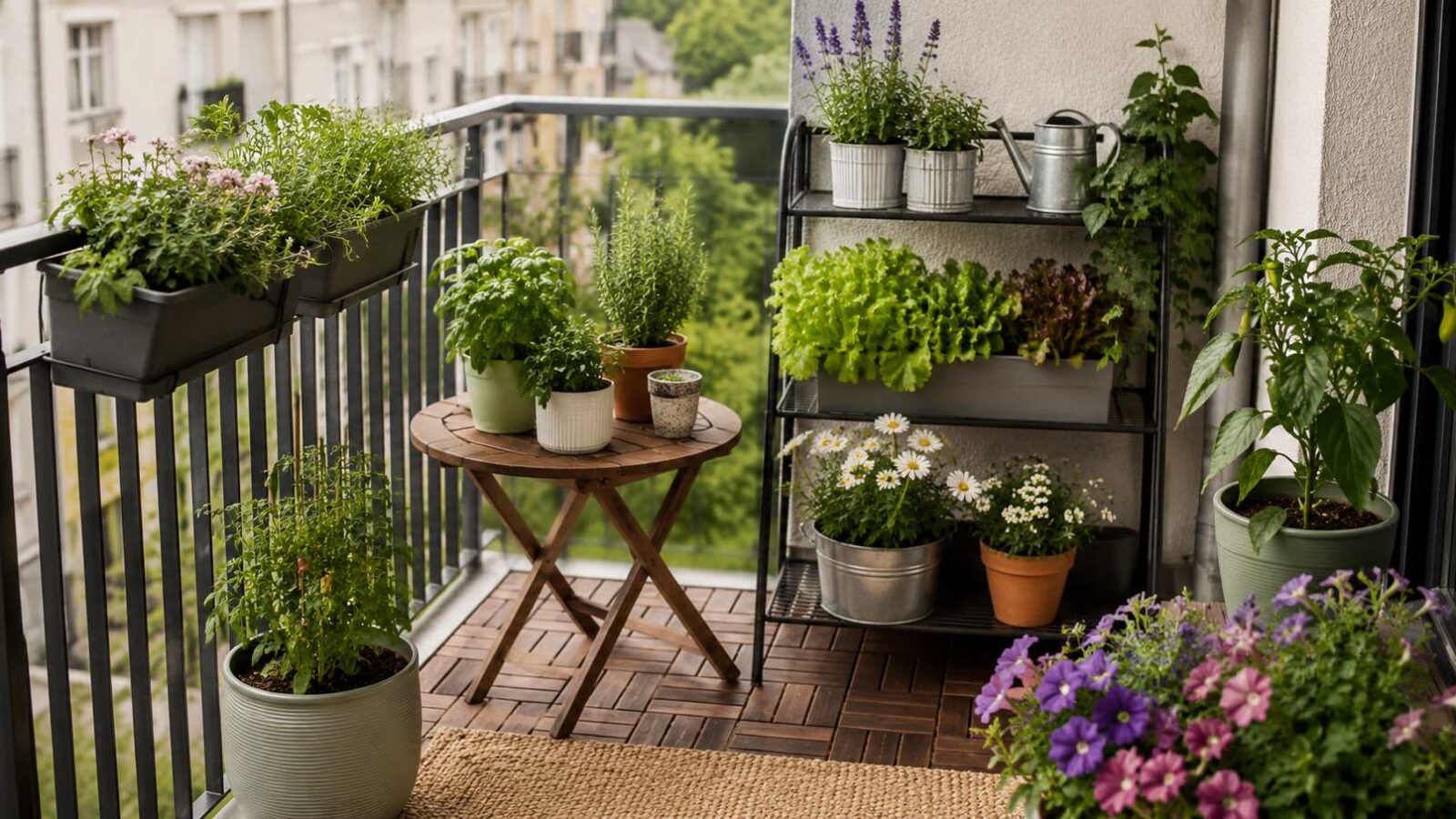
A balcony rewards going vertical. Railing planters, hanging baskets, tiered stands, and wall-mounted pots multiply your growing space without using the floor, the same instinct that makes sizing and layering work indoors: use the whole volume, not just the footprint. Group plants with similar water and light needs together so care is simple, and keep the heaviest pots near the wall or over supports rather than on the railing edge.
A simple starter setup
If you want a concrete place to begin, this beginner balcony works almost anywhere with reasonable light:
- Three or four large pots with drainage, filled with quality potting mix.
- A mixed herb pot of basil, mint, and thyme for a sunny spot, or a leafy-greens pot for shade.
- One larger container for a cherry tomato or chili if you have sun, or a fern for foliage if you do not.
- A railing planter of easy flowers for color, watered along with the rest.
- A small watering can and a bag of general-purpose feed, and a habit of checking the soil each morning.
That is enough to learn the watering rhythm and get real results without being overwhelmed, and it scales up easily once you are confident.
Start smaller than your enthusiasm suggests. The most common reason people abandon a balcony garden is buying twenty plants in the first weekend, then drowning in watering and watching half of them fail. Begin with three or four easy, light-appropriate plants in good-sized pots, get a feel for the watering rhythm, and expand once you are keeping those alive. A few thriving herbs you in practice use will do more for your enthusiasm than a crowded balcony of struggling plants. Gardening rewards momentum, and nothing builds momentum like early success, so stack the odds in your favor by starting small, easy, and well matched to your light. The ambitious balcony jungle can come later, once the basics feel like second nature.
Balcony gardening mistakes with lasting effects
- Buying plants without checking whether your balcony’s light suits them.
- Using pots without drainage and drowning the roots.
- Choosing containers too small, so plants dry out and stay stunted.
- Using garden soil instead of potting mix in containers.
- Underwatering in summer, when sun and wind dry pots far faster than ground beds.
A small balcony can still grow well
A successful balcony garden starts with honest light assessment, the right container-friendly plants, pots with drainage, proper potting mix, and attentive watering. Begin with a handful of easy, light-appropriate plants, go vertical to make the most of the space, and expand as your confidence grows. If you catch the bug, a raised bed garden is the natural next step. Either way, the principles stay the same: right plant, right light, right container, and a little attention most days.
Balcony garden questions for renters
What can I grow on a balcony as a beginner?
Match plants to your light. Sunny balconies suit herbs, cherry tomatoes, chilies, and easy flowers; shadier ones suit leafy greens, ferns, mint, and shade-loving flowers like begonias.
How often should I water balcony plants?
More often than a garden, since containers dry quickly. In summer sun and wind that can mean daily. Check the top inch of soil and water when it is dry, ensuring pots drain freely.
Do I need special soil for container gardening?
Yes. Use a proper potting mix rather than garden soil, which compacts and drains badly in pots. Good mix and a container with drainage holes prevent most beginner failures.
How do I deal with pests on a balcony garden?
Start with prevention, since healthy, properly watered plants resist pests far better than stressed ones. Check leaves, including their undersides, regularly so you catch problems like aphids early, when a blast of water or simple insecticidal soap is enough. Avoid overwatering, which invites fungus gnats and root problems, and remove dead leaves and debris where pests breed. Encouraging the situation rather than reaching for harsh chemicals usually works on a balcony’s small scale, and companion planting herbs like basil and mint can help deter some insects while giving you something to harvest.