A dining table is one of those purchases that quietly dictates the whole room. Get the size or shape wrong and you spend years squeezing past chairs, bumping the wall, or eating at a table that swallows the space. Get it right and the dining area flows, seats the people you in practice host, and feels settled. The good news is that choosing a dining table is mostly arithmetic: a few clearance numbers and an honest count of who sits there decide most of it, long before you get to style.
Like a sofa in a small living room, a dining table is a measurement problem first and a looks problem second. Start with the room, not the showroom.
Measure the room before the table
The single most important number is clearance. You need at least 36 inches between the table edge and the nearest wall or furniture so chairs can pull out and people can walk behind them; 42 to 48 inches is more comfortable. Measure your room, subtract that clearance from all sides, and the rectangle left in the middle is the largest table footprint that will in practice work. Almost every dining-table regret traces back to skipping this step and buying for the table you wanted rather than the room you have.
Match the shape to the room
Rectangular
The default for a reason: rectangular tables seat the most people and suit long or open-plan rooms. They can feel formal and need more length, so they want a room that can spare it.
Round
Round tables suit small and square rooms, ease traffic flow because there are no sharp corners, and make conversation easier since everyone faces in. The trade-off is that they do not scale well past six seats without becoming too wide to reach across.
Square
Good for intimate four-person dining in a compact, square room. Push two together for larger gatherings. Less efficient for big groups.
Oval
A compromise that seats nearly as many as a rectangle while softening the corners, which helps in tighter rooms and homes with children.
Size it to the people, not the catalog
Plan on about 24 inches of width per person so everyone has elbow room, plus room for serving dishes down the middle. A table seating six runs roughly 60 to 72 inches long; eight needs 72 to 96 inches. Be realistic about how often you host a crowd: a table sized for the rare big dinner can feel cavernous every ordinary night. If large gatherings are occasional, an extendable table with a leaf is smarter than a permanently huge one.
Materials and daily life
Choose the top for how you live, not just how it looks.
- Solid wood is warm, durable, and repairable, but shows scratches and needs occasional care.
- Engineered wood and laminate cost less and resist scratches, though they cannot be refinished.
- Glass keeps a small room feeling open and light, but shows every fingerprint and smudge.
- Stone and concrete look striking and last, but are heavy and can stain without sealing.
- Metal bases add an industrial edge and stability; pair with a top that suits your wear tolerance.
Pulling the room together
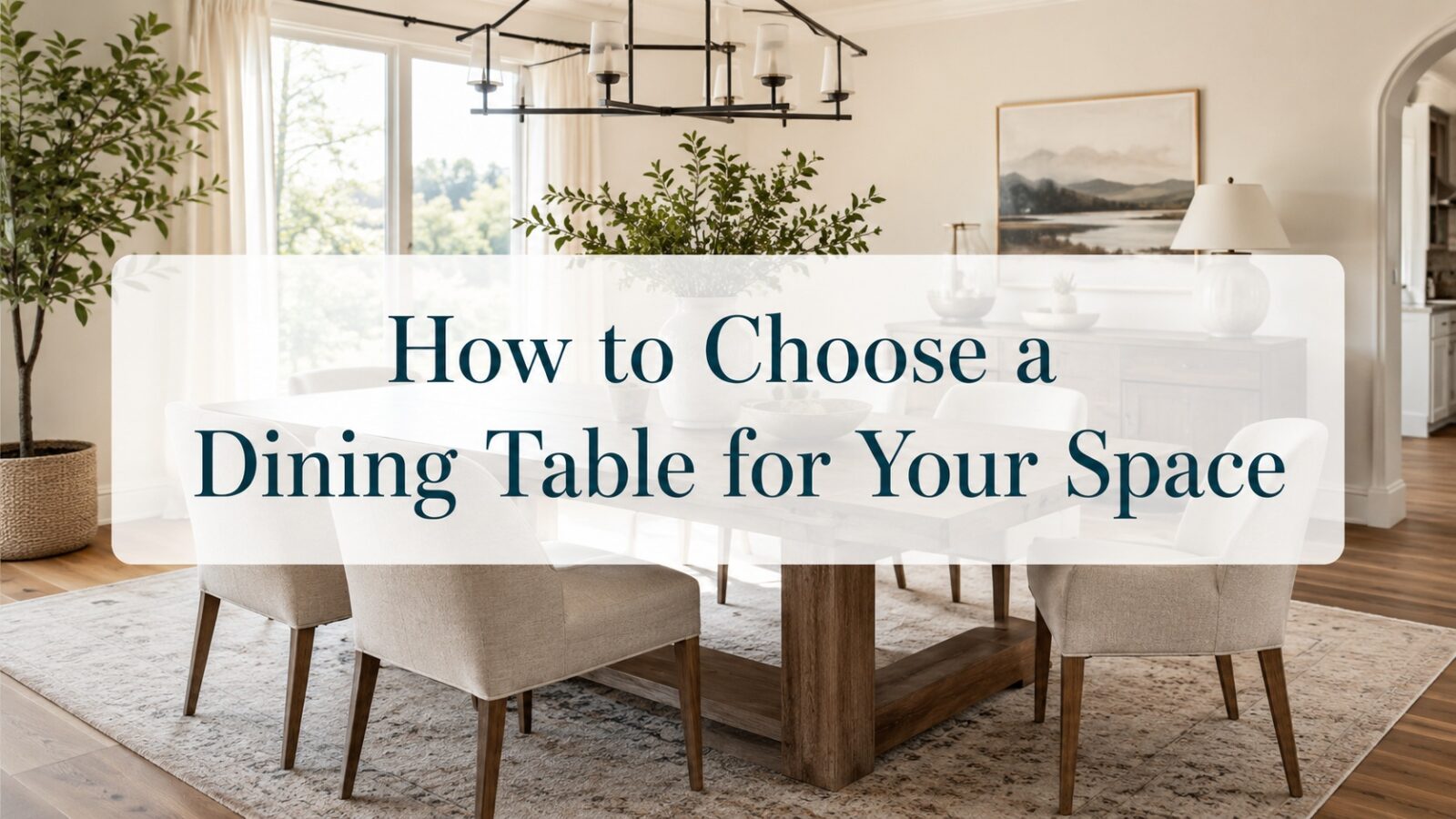
A table does not live alone. Leave room for the chairs to tuck fully under when not in use, and anchor the set with a rug sized so all chairs stay on it even when pulled out. Keep the overall look consistent with the rest of your home; the same restrained, warm direction in current interior design trends applies here, where one well-chosen table beats a matching suite of fussy furniture.
Pedestal or legs?
The base matters more than people expect, especially in a tight room. A pedestal or trestle base leaves the perimeter clear, so chairs slide in anywhere and an extra guest can squeeze on a corner; it is the friendlier choice for small or oddly shaped rooms. A four-leg table is sturdier for heavy use and large sizes, but the legs dictate exactly where chairs can go and can block a corner seat. If you often seat one more than the chairs allow, a pedestal base quietly buys you flexibility that a legged table cannot.
Dining room sizing traps
- Buying the table before measuring clearance, then living with chairs that hit the wall.
- Sizing for the once-a-year big dinner instead of everyday use.
- Choosing a shape that fights the room, like a long rectangle in a square space.
- Picking a glass or delicate top for a busy household with kids.
- Forgetting that chairs need to tuck under and pull out within the room’s clearance.
Leave room for chairs to move
If you are torn, err one size smaller than you think you need. People consistently overestimate how often they host large groups and underestimate how much daily comfort they lose to a table that crowds the room. An extendable table solves this elegantly: it lives small for everyday meals and grows for the occasional crowd. A room that breathes around a modest table beats a tight room built around an aspirational one.
Dining table questions for awkward rooms
How much space do I need around a dining table?
At least 36 inches between the table edge and the nearest wall or furniture, and ideally 42 to 48 inches, so chairs pull out and people can walk behind them comfortably.
What size dining table seats six?
A rectangular table around 60 to 72 inches long, or a round table about 54 to 60 inches across. Allow roughly 24 inches of width per person plus space for serving dishes.
Is a round or rectangular table better for a small room?
Usually round. With no corners, it eases traffic flow and suits compact, square rooms, though it does not scale past about six seats as well as a rectangle does.
What is the best dining table material for a family with kids?
A durable, forgiving surface beats a delicate one. Solid wood with a hard-wearing finish hides and survives daily life and can be sanded and refinished Avoid glass, which shows every fingerprint and chips at the edges, and unsealed stone or concrete, which can stain. Rounded or oval edges are also safer around small children than sharp corners. The goal is a table you can relax about, since a surface you are constantly protecting stops being the easy gathering spot a family table should be.
A dining table should support movement
Choose a dining table by working from the room outward: measure clearance first, match the shape to the space, size it to the people you in practice host, and pick a top that survives your daily life. Add a correctly sized rug and chairs that tuck away, and the table becomes the easy anchor of the room rather than the thing everyone squeezes around.