A refrigerator is one of the few purchases you make roughly once a decade, and it runs every hour of every day in between. It typically lasts 10 to 15 years and costs anywhere from several hundred to several thousand dollars, which means choosing the wrong size, configuration, or feature set is an expensive mistake you live with for a very long time. The good news is that picking the right fridge is a straightforward decision once you work through it in the right order: space first, then layout, then capacity, then features.
Most buyers do this backwards, falling for a feature in the showroom before checking whether the unit even fits or suits how they cook. Reverse that and the choice gets easy.
Start with the space, not the fridge
Measure the opening before you look at a single model: width, height, and depth, plus the clearance the doors need to open fully and the path to get the unit through your home. Leave roughly an inch of breathing room on the sides and top for ventilation, since a fridge crammed into a tight cabinet runs hot and dies young. Note whether you need a counter-depth model, which sits nearly flush with cabinets for a built-in look at the cost of some interior volume.
Choose a configuration that matches how you cook
Top-freezer
The classic layout: cheapest, most energy-efficient, and reliable, with the freezer up high. Best for budget-conscious buyers and anyone who values simplicity over features.
Bottom-freezer
Puts the fridge section at eye level where you reach most often, with the freezer in a drawer below. A comfortable everyday choice if you cook fresh more than you freeze.
Side-by-side
Fridge and freezer in tall vertical halves. Good freezer access and often fits ice and water dispensers, but the narrow compartments struggle with wide items like pizza boxes and platters.
French-door
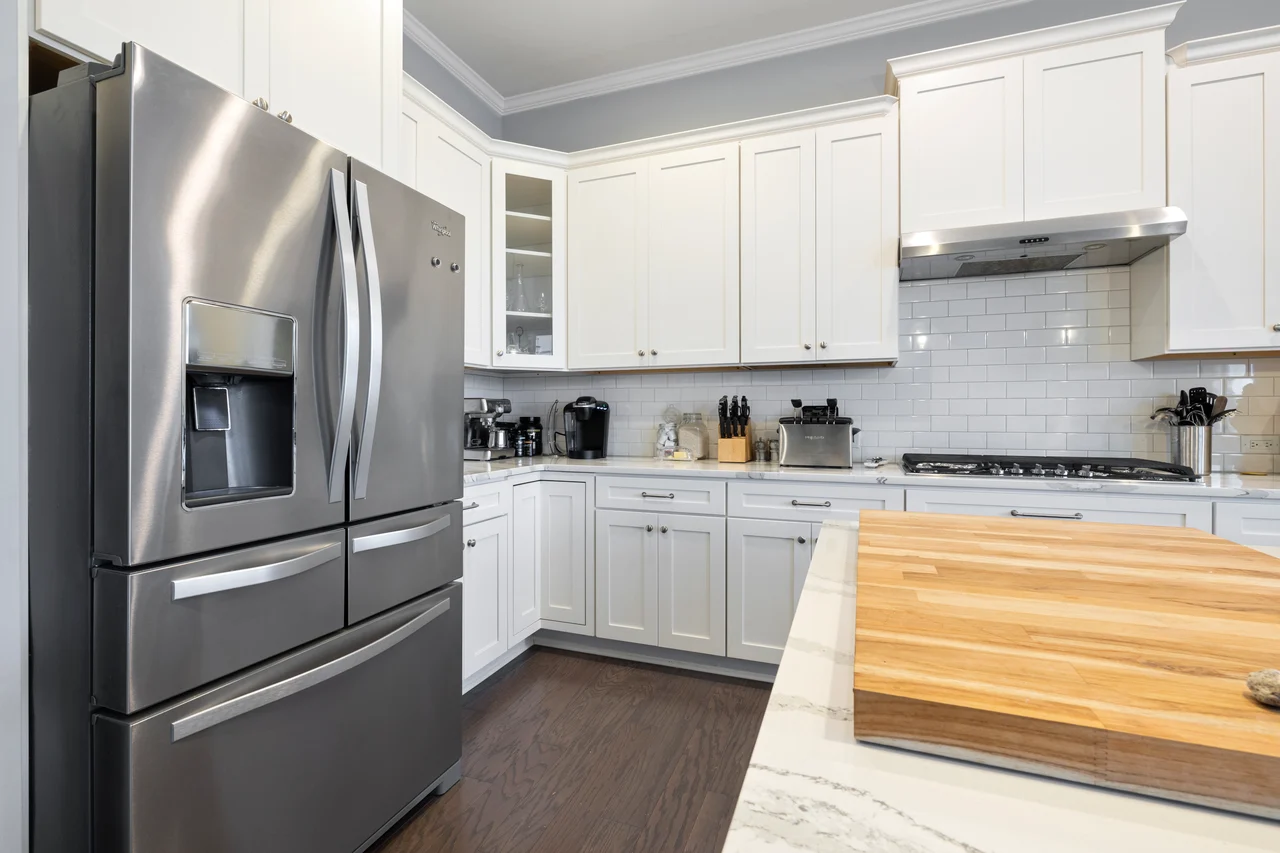
Two doors over a freezer drawer, currently the most popular style. Wide shelves, good organization, and energy-efficient because you open only half at a time. Usually the most expensive mainstream layout.
Size it to your household
A rough guide is 4 to 6 cubic feet of fridge space per adult, adjusted for how you shop and cook. Big-batch cooks and families who shop weekly need more; small households and frequent shoppers need less. Bigger is not automatically better: an oversized fridge that runs half empty wastes energy and money for 15 years. If your kitchen is tight, the fridge choice should fit into your broader plan for organizing a small kitchen rather than dominating it.
Features worth paying for, and features to skip
Some features earn their cost and some are showroom theater.
- Worth it: an energy-efficient certification, which pays back over the appliance’s long life in lower running costs.
- Worth it: adjustable, spill-proof shelves and a dedicated deli or produce drawer with humidity control.
- Worth it for many: a water and ice dispenser, if you will use it and can plumb it in.
- Usually skip: built-in screens and app connectivity, which add cost and rarely change daily use.
- Consider carefully: through-the-door ice makers, which are convenient but a common repair point.
Energy use is the quiet headline. Because a fridge runs continuously, the gap between an efficient and an inefficient model adds up over a decade, the same long-run math that makes efficiency matter when you choose a washer and dryer or an air purifier.
Counter-depth or standard depth?
One dimension decision trips up more buyers than any other: depth. Standard-depth refrigerators stick out several inches past typical countertops, which gives more interior volume but interrupts the line of the kitchen. Counter-depth models sit nearly flush with the cabinets for a sleek, built-in look, trading some capacity for the cleaner profile. Neither is better in the abstract. If you cook in bulk and value every cubic foot, standard depth wins; if the fridge sits in a sight line and you want the kitchen to feel integrated, counter-depth is worth the lost volume. Measure the protrusion against your walkway before deciding, because a fridge that juts into a narrow galley makes the whole kitchen feel tighter.
Refrigerator questions to settle before shopping
What size refrigerator do I need?
Plan on roughly 4 to 6 cubic feet per adult, adjusted for how often you shop and how much you cook ahead. Confirm the physical dimensions fit your space and doorways before buying.
Which configuration is most reliable?
Top-freezer models are generally the simplest, cheapest, and most reliable, with the fewest things to break. More features and dispensers add convenience but also potential repair points.
Are smart refrigerators worth it?
For most people, no. The cameras and screens add significant cost and rarely change daily use. Spend on capacity, layout, and energy efficiency instead.
How much clearance does a refrigerator need around it?
Leave roughly an inch of space on the sides and top, and a little behind, so the unit can shed heat and ventilate properly. A fridge squeezed into a tight cabinet runs its compressor harder, uses more energy, and fails sooner. Also confirm the doors can open far enough for the drawers and shelves to slide out, since a fridge wedged beside a wall may only open partway. Check the path from your front door to the kitchen as well, including any tight turns, before delivery day.
Measure twice before delivery day
- Falling for a feature before confirming the unit fits the space and the doorway home.
- Forgetting ventilation clearance and shortening the appliance’s life.
- Buying far more capacity than the household needs and paying to cool empty space.
- Choosing side-by-side without realizing wide items will not fit the narrow shelves.
- Ignoring the energy rating on an appliance that runs every hour for 15 years.
A refrigerator should fit the household rhythm
The single most common refrigerator regret is size, in both directions. People buy too large because the showroom makes everything look small, then struggle to fit it home and pay to cool empty shelves; or they buy too small to save money and run out of room within a year. Measure your space and your real grocery habits honestly before you set foot in a store, and let those two numbers, not a glossy feature, lead the decision. A fridge is infrastructure, not a gadget, and the best one is usually the one you stop noticing because it simply fits, holds what you need, and costs little to run. Decide the size and layout at the kitchen table with a tape measure, and treat the showroom visit as confirmation rather than discovery.
Buy a refrigerator in the right order: confirm it fits the space with ventilation clearance, choose a configuration that suits how you cook, size it honestly to your household, and pay for energy efficiency and useful storage rather than screens. Get those basics right and the appliance quietly does its job for the next decade and a half.