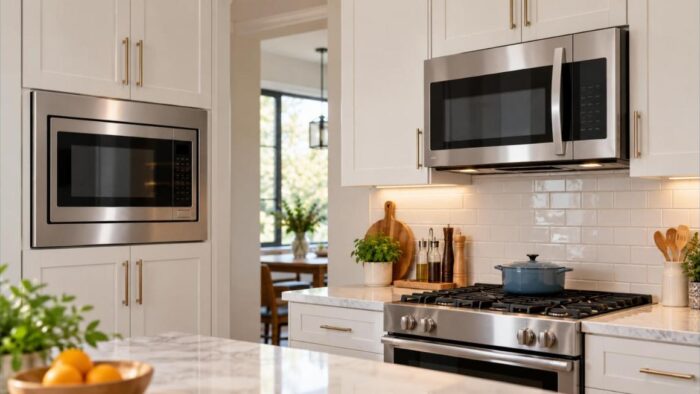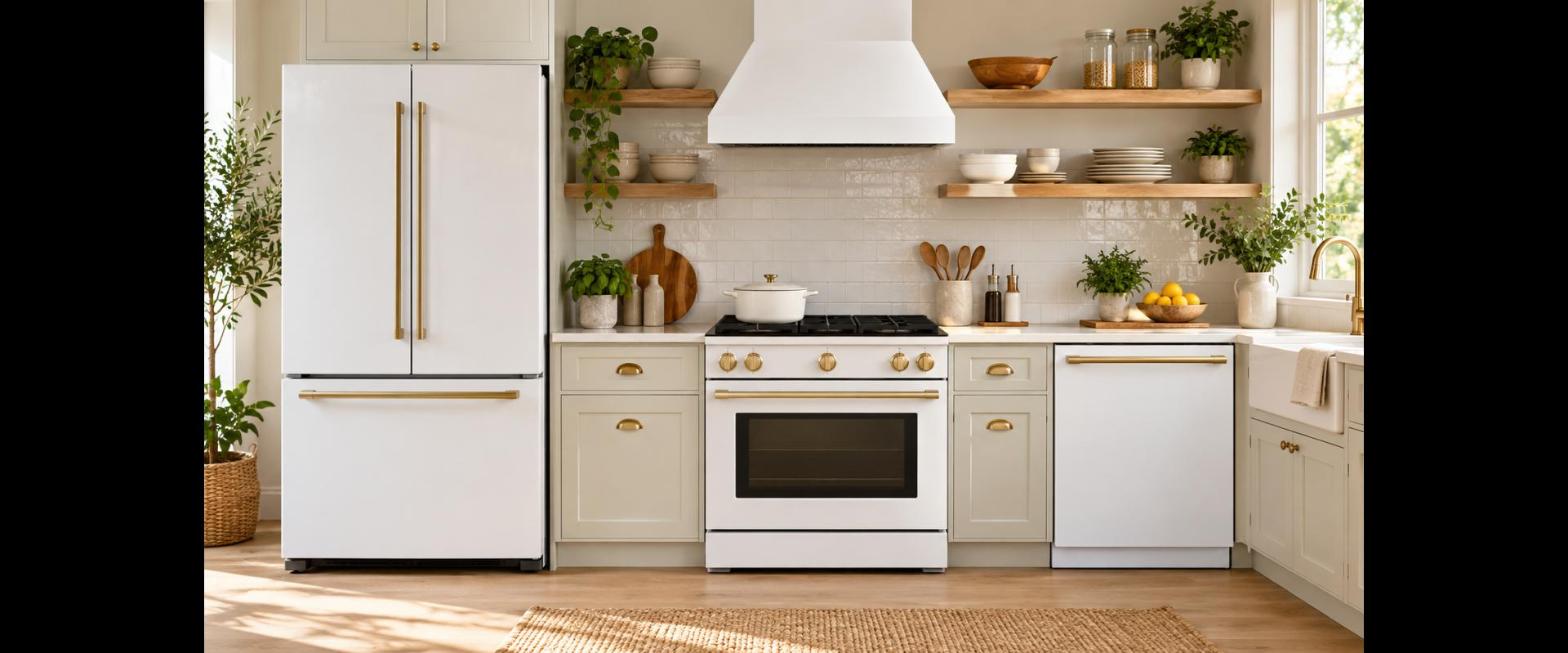
White appliances are a sound choice again: they cost the same or less than stainless steel, do not show fingerprints, and suit both white and coloured cabinets. The two things to get right are finish and match. Modern matte and glass-front whites look current; glossy textured white reads as dated. Whites differ between brands (some are cool and bluish, some warm and creamy), so buy the visible appliances from one manufacturer’s range, and choose handles and trim, not the white itself, to tie into the room.
White versus the other finishes
| Finish | Fingerprints | Scratches | Price vs standard | Dates? |
|---|---|---|---|---|
| Matte white | Hidden | Low visibility | Same or slightly more | Current; low risk |
| Glass-front white | Wipes clean; shows smears in raking light | Resistant | More | Current |
| Gloss white (classic) | Hidden | Yellowing possible on older plastics | Lowest | Looks basic rather than dated |
| Stainless steel | Shows unless fingerprint-resistant | Shows; cannot be touched up | Baseline | Safe |
| Black stainless | Hidden | Coating scratches to silver; hard to repair | More | Trend-dependent |
| Panel-ready (integrated) | None; cabinet door | Depends on door | Most, plus panels | Never |
White suits small and dark kitchens especially because it reflects light and makes a large fridge visually recede against pale walls. Keep it fresh with a non-abrasive cleaner; avoid bleach on plastic trim, which yellows it. For where white sits among current finishes see appliance colour trends, and for choosing the largest white box in the room, how to choose a refrigerator.
What changed
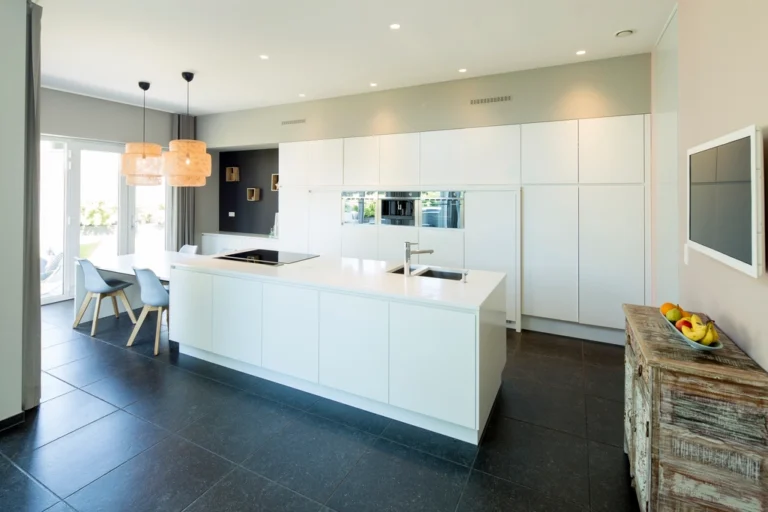
Three things. Modern white finishes are crisp and neutral rather than cream, often with a matte texture or a glass front. Styling has caught up, with flush handles, clean lines and minimal branding. And kitchen design has moved towards lighter, warmer, less industrial looks, where a wall of stainless can feel cold.
There is also a practical reason: white appliances remain among the cheapest in any model range, so the same money buys a higher specification.
Practical advantages
- Fingerprints barely show. The main daily irritation with stainless largely disappears.
- Easy to clean. Smooth white surfaces, especially glass, wipe down quickly.
- Lighter in a small kitchen. White reflects more light and makes a compact room feel larger.
- Cheaper. Often the lowest-cost finish in a range.
The trade-off is that food stains, tomato splashes and tea rings show more clearly than on dark finishes, and plastic components can yellow over many years near a heat source.
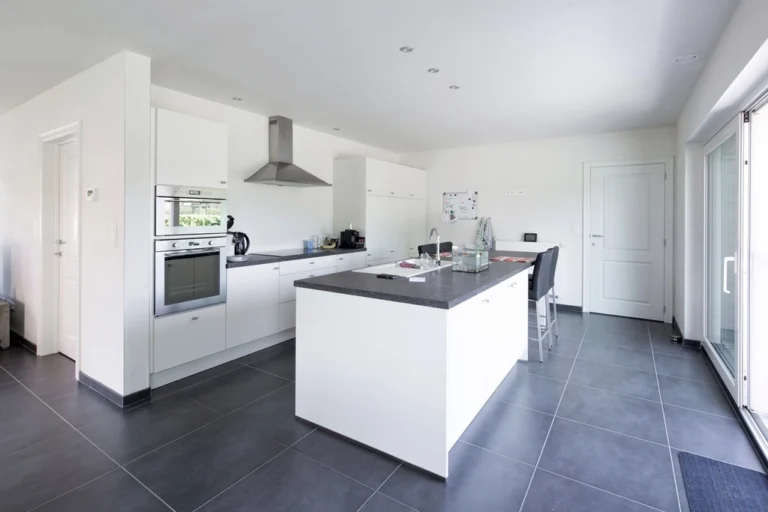
Styling that works
Match the whites deliberately. Appliance white, cabinet white and wall white are rarely identical. Either match them closely or make the contrast obvious – a warm white cabinet against a cool white fridge reads as a mistake, while a deep green cabinet against a white fridge reads as a decision.
Use contrast somewhere. All-white kitchens flatten without a counterpoint. Dark worktops, a wood island, black tapware or coloured lower cabinets give the white appliances something to sit against.
Bring in texture. Wood open shelving, a textured splashback, stone worktops and woven accessories stop a white kitchen reading as clinical.
Choose hardware carefully. Brass, matte black and brushed nickel all work against white. Keep handles, taps and light fittings in one metal family.
Mixing white with other finishes
White and stainless together usually looks dated rather than eclectic. White with matte black works well, as does white appliances with a single statement range in colour. If you are replacing appliances one at a time, decide the end state first and buy towards it, rather than matching whatever is currently there.
Which rooms suit it
White appliances sit naturally in cottage, Scandinavian, coastal, modern farmhouse and minimalist kitchens. They work less well in dark, dramatic schemes, where black stainless or panel-ready units usually look better.
Resale
Stainless remains the safest finish for resale because it suits the widest range of tastes. White is a close second and is no longer read as a budget choice, particularly in a well-styled kitchen. Bold colours and unusual finishes carry more resale risk.
Keeping white looking white
- Wipe spills promptly; tomato, turmeric and coffee stain if left
- Use a non-abrasive cream cleaner on stubborn marks, never a scouring pad
- A dilute solution of bicarbonate of soda lifts most surface stains without damaging the finish
- Keep heat sources away from plastic trim, which is what yellows over time
- Check door seals regularly, since grime shows clearly against white
The short version
White appliances are a genuine option again, not a compromise. Buy them if your kitchen leans light and warm, keep the whites consistent, add contrast and texture elsewhere, and take the saving on the price difference as a bonus.
When this does not apply
If you are replacing one appliance in a stainless kitchen, match what is there. And white ranges are narrower at the premium end; if you want a specific high-end oven or fridge, check it is offered in white before planning around it.
Related guides
- Kitchen Appliance Brands Ranked by Reliability
- Kitchen Appliance Packages: When Bundles Save Money
- Small Kitchen Appliance Essentials: The Realistic List