Microwaves differ less in how they cook than in where they go, and placement is the decision that affects your kitchen for the next decade. Here is how the five types compare.
Countertop
The default. Cheapest, no installation, easy to replace, and available in every size and power level. The cost is worktop space – a full-size countertop microwave occupies a significant share of a small kitchen.
If you go this route, measure the space including ventilation clearance, usually 7 to 10 cm at the rear and sides. Placing one in a tight alcove without clearance causes overheating and early failure. Trim kits are available to fit some countertop models into cabinetry; use only the kit designed for that model.
Best for: rentals, budgets, and kitchens with worktop to spare.
Over-the-range
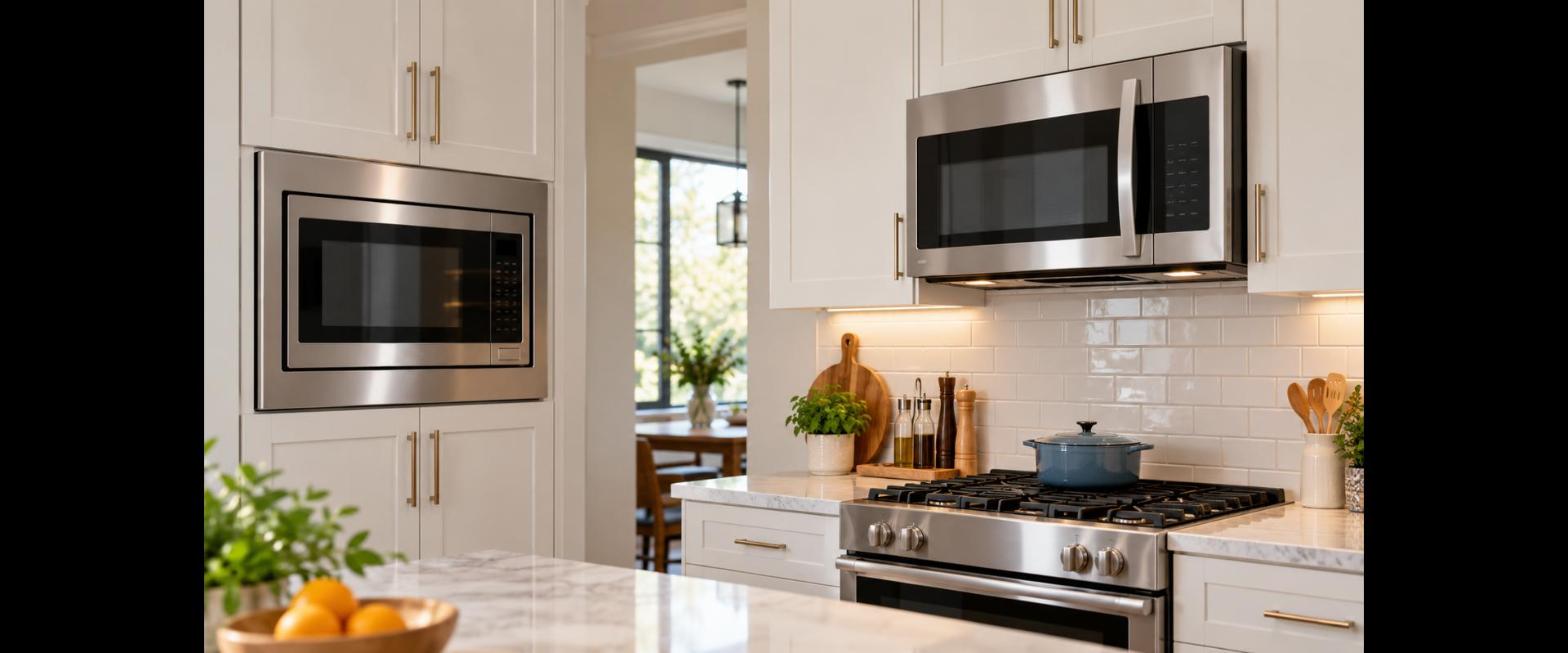
Mounted above the hob, combining a microwave with an extraction hood. It saves worktop space and uses a position that would otherwise hold a dedicated hood.
The compromises are significant. Extraction performance is weaker than a purpose-built hood – most over-range units move far less air and many are recirculating rather than ducted. Reaching over a hot hob to remove a dish is awkward and can be unsafe, particularly for shorter users. And the microwave sits higher than ideal for everyday use.
Best for: small kitchens where one appliance must do both jobs and cooking is light.
Built-in wall microwave
Installed into cabinetry or stacked above a wall oven, with a trim kit for a flush finish. It frees the worktop, sits at a comfortable height, and looks integrated. More expensive, needs a cabinet cut-out and a nearby outlet, and replacing it later means finding a model that fits the existing opening.
Best for: planned kitchens where the cabinetry is being built or changed anyway.
Microwave drawer
Installed below the worktop or in an island, opening as a drawer. Excellent accessibility – no reaching up, and easy for children or wheelchair users. Dishes are loaded from above, which makes removing a hot bowl safer. The most expensive type, with a narrower choice of models and a more involved installation.
Best for: islands, accessible kitchen design, and premium renovations.
Combination and speed ovens
Units that combine microwave with convection, grill or steam, usually installed as a built-in. They work as a genuine second oven for small batches and are popular in combination wall-oven configurations. Expect a significant price premium and a learning curve on the combination modes.
Power and capacity
Output power, not input, is what matters. Most full-size microwaves deliver 900 to 1200 watts; compacts deliver 600 to 800. Below about 800 watts, recipe times on packaging become unreliable. Capacity ranges from around 20 litres for a compact to 40 litres or more for a large countertop model – check that your largest dinner plate rotates freely, which is a more useful test than the litre figure.
Inverter models vary power continuously rather than pulsing on and off, which gives noticeably better results at defrost and low settings.
Venting, if the unit also extracts
Ducted extraction to the outside is far more effective than recirculating through a charcoal filter. If an over-range model is your only extraction, duct it if the building allows. Check the airflow figure and compare it against a dedicated hood before accepting the compromise.
Choosing quickly
If worktop space is available and budget matters, buy a countertop model. If the kitchen is being renovated, a built-in or drawer unit is worth the cost for the layout it unlocks. Choose over-the-range only if you cannot fit a separate hood, and accept the extraction compromise knowingly rather than discovering it later.
Related guides
- Range Hoods: Ducted vs Ductless Explained
- Refrigerator Types Compared: French Door vs Side-by-Side vs Top Freezer
- Appliance Extended Warranties: When They Make Sense